Home Blog Page 4

Welcome Back, Chamisa – But You Will Not Win Again Because Zimbabweans Are Stupid

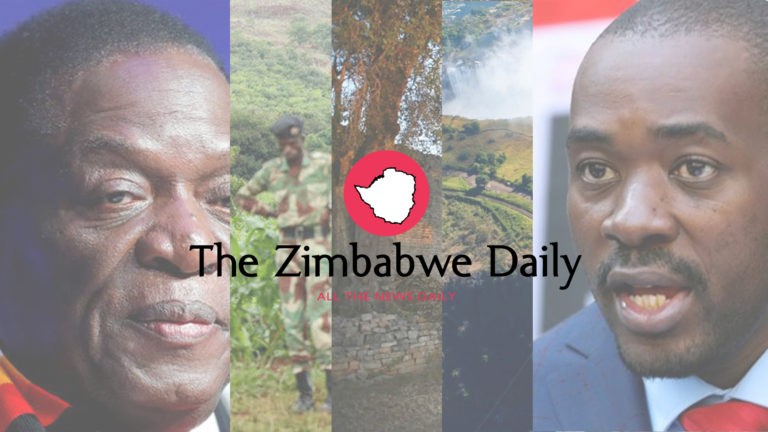
In an interesting development, Nelson Chamisa has announced his return to frontline politics. As expected, the announcement has reignited hope among many Zimbabweans who feel politically orphaned. Yet just as before, the nature of his political vehicle remains vague, raising immediate questions about whether meaningful lessons have been learned from the dramatic collapse of the Citizens Coalition for Change.

There is no doubt that Chamisa represents hope to millions who are exhausted by Zimbabwe’s political stagnation. This is especially true at a time when elements within ZANU PF are openly floating the idea of illegally extending Emmerson Mnangagwa’s term to 2030. The brazenness is startling. Figures such as Temba Mliswa have already begun rehearsing excuses, arguing that the COVID-19 pandemic “robbed” the president of valuable governing time.

This argument is laughable.

If anything, the pandemic was precisely the moment when competent leadership was required. A crisis is not an excuse for failure; it is the test of leadership. To claim lost time is to admit lost capacity.

So yes, Chamisa’s return is exciting. It disrupts political complacency and briefly reminds Zimbabweans that alternatives still exist. But excitement should not be confused with realism. If an election were held next year, I do not see Chamisa winning it.

This scepticism is not rooted in dislike, but in structural reality. ZANU PF still controls the state machinery, the judiciary, the security apparatus, the media landscape and, most critically, the electoral commission. These factors alone make free and fair competition nearly impossible.

But they are not the biggest problem.

The most significant reason ZANU PF remains in power is the wilful stupidity of a large segment of the Zimbabwean electorate. Millions continue to vote for a party that has delivered nothing but poverty, decay and humiliation, while proudly framing deprivation as a revolutionary achievement. Some even sing songs celebrating boreholes and wells in modern cities as if this were progress rather than national failure.

This is not ignorance imposed from above. It is voluntary political submission.

Chamisa cannot win unless he fundamentally changes the mindset of those who actively vote against their own material interests. That requires more than rallies, slogans or charisma. It requires confronting deeply embedded political superstition and cultural loyalty that treats suffering as patriotism.

There is no evidence that this transformation will happen in the next year.

So while Chamisa’s return is welcome, and while hope is emotionally satisfying, hope alone does not win elections in Zimbabwe. Until voters themselves change, the outcome will remain the same.

Provocative? Yes. Uncomfortable? Absolutely. But unless we are prepared to speak honestly about the electorate itself, we will keep repeating the same rituals and expecting different results.

And that, more than anything ZANU PF has done, is the real tragedy.

Trump is wrong about Europe. But Brexit Britain made his argument possible

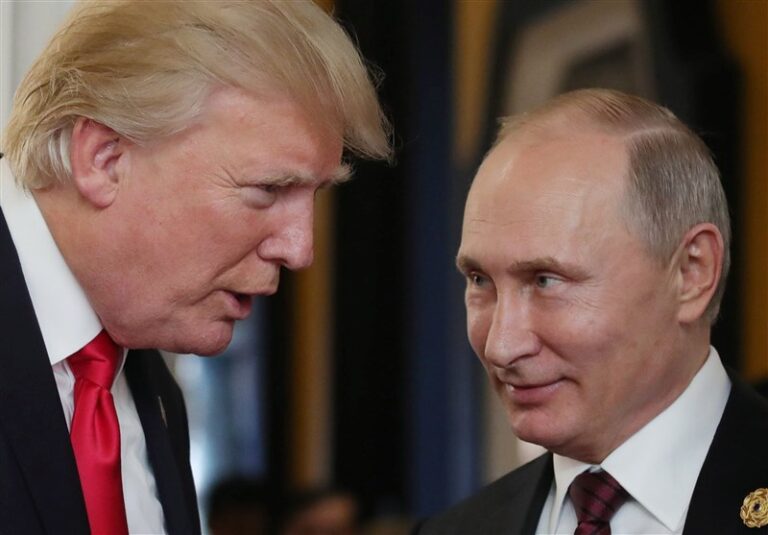
Another week, another provocation from Donald Trump. This time he claims that European allies were not at the “pointy end” of NATO’s wars. The remark is insulting and historically false. European soldiers fought and died in Afghanistan and Iraq. Their sacrifice is not in dispute.

What is in dispute is the moral authority of those now expressing outrage.

Across British politics, figures who spent years campaigning against a stronger Europe are suddenly appalled that the United States questions European credibility. Among them are Kemi Badenoch, Nigel Farage, and a parade of MPs who left the Conservative Party to join Reform UK, taking their Euroscepticism with them.

This is where the outrage collapses under its own weight.

During Brexit, the idea of Europe developing real strategic autonomy was deliberately turned into a scare story. Voters were warned that the European Union “wanted an army”, as if collective defence were evidence of tyranny rather than adulthood. A stronger Europe was framed as a threat to Britain rather than a shield for it.

That argument has not merely aged badly. It has failed completely.

For decades, Europe outsourced its security to the United States through NATO. In return, it accepted dependency and a reduced voice. European states went to war in Iraq and Afghanistan largely because alliance politics and American pressure made refusal costly. These were not wars of clear European choosing, yet Europe paid for them in blood and treasure all the same.

Trump did not invent this imbalance. He is exploiting it.

A continent that cannot guarantee its own defence will always be spoken down to by those who can. That is not ideology. It is geopolitics. Trump’s language is crude, but the vulnerability he is pointing at is real, and it was preserved by those who argued relentlessly against European strength.

This is why the recent hardening of language from Keir Starmer, calling Trump’s remarks “appalling” and “insulting”, matters. For too long, European leaders have offered concessions, soft words, and diplomatic cushioning in the hope of managing Trump. All that achieved was normalisation. Behaviour that would once have been unthinkable was quietly accepted as the price of American protection.

That era is ending, whether Britain admits it or not.

This moment now sets a trap for Reform, for Brexit hardliners, and for those Conservatives who reinvented themselves as anti European crusaders. They cannot argue simultaneously that Europe must remain weak, oppose deeper cooperation, and then demand security guarantees from a United States they no longer trust. They will be forced to choose between honesty and nostalgia.

It also tests Labour and the broader left.

This is the first serious opportunity since Brexit for pro European voices to speak clearly about Britain’s place in the European family without relitigating old referendums. Not as sentiment or regret, but as a matter of security, economic growth, and political stability. When an ally becomes a source of risk rather than reassurance, fence sitting is no longer a serious option.

The question now is simple. When Britain’s security and prosperity are threatened, who stands with us? If the answer is Europe, then pretending otherwise becomes untenable.

Trump did not create this reckoning. He accelerated it. Those who once warned that a strong Europe was dangerous should show some restraint in their outrage. This is not a moment for pearl clutching. It is a moment for clarity.

Europe was warned. Some chose not to listen. Now they are being answered.

Mwonzora Can Keep the MDC. Zimbabwe Has Moved On and Does Not Need the MDC

In recent days, Douglas Mwonzora has once again spoken about unity, legitimacy and the future of the opposition. It is not the first time these themes have been raised, and it is unlikely to be the last. But it is precisely because we have lived through this cycle before that his position now rings hollow.

I am not a politician. I have never claimed to be one. But I do have a voice, and like many Zimbabweans, I have been part of the long struggle for a credible, democratic opposition. I was there through the battles over legitimacy, over names, over symbols, and over property. I watched as the opposition was deliberately fractured, not by popular will, but through legal manoeuvres and elite bargaining.

The so-called litmus test of opposition leadership was not about who controlled the MDC name or its assets. It was about who carried the trust of the people. Nelson Chamisa passed that test decisively. Not because of courts, titles or inheritance, but because Zimbabweans recognised in him a legitimate vehicle for challenging ZANU PF.

Mwonzora may have won the party name. He may still control the MDC brand and its properties. But he lost the people. And in politics, that loss is terminal.

The truth is simple. Zimbabweans did not rally behind a name or a constitution. They rallied behind a cause. They wanted a real opposition, not a legal shell. When Chamisa emerged, stripped of the MDC label but backed by popular support, it became clear that the MDC as an institution was no longer essential to opposition politics.

To now claim leadership of the opposition, or to speak of unity on the basis of a hollowed-out structure, is laughable. Unity cannot be built around something that has already lost relevance. It must be built around legitimacy, energy and public confidence.

There is also a generational reality that Mwonzora and others refuse to confront. Many young Zimbabweans have no emotional attachment to the MDC at all. For them, the MDC is history, not hope. If elections were held tomorrow, a significant number would be voting for the first time without any sense that the MDC represents their future.

That is why the insistence on reviving the MDC misses the point. The party has served its purpose. It played its role in Zimbabwe’s political evolution. But history does not pause out of sentiment.

Mwonzora is welcome to keep the MDC. He has earned the name, the buildings and the letterhead. But he should not confuse ownership with relevance. Chamisa has already demonstrated that the struggle against ZANU PF does not require the MDC brand to succeed.

Zimbabwe’s opposition does not need to look backwards. It needs to be honest enough to let what has died finally rest, and brave enough to build something new.

Land, Legitimacy, and Double Standards: Ukraine, Palestine, and the West’s Dilemma

The wars in Ukraine and Palestine highlight one of the most striking contradictions in international politics: the selective application of the principle that land should never be taken by force.

When Russia annexed Crimea in 2014, and later launched its full-scale invasion of Ukraine, Western governments responded with sanctions, military aid for Kyiv, and strong declarations that borders cannot be redrawn through aggression. Ukrainian resistance has been praised as both legitimate and heroic.

But Palestinians have long argued that their land, too, has been taken by force, through settlement expansion, displacement, and occupation. Their resistance is rarely described as legitimate. Instead, it is often condemned as terrorism, while Israel continues to enjoy extensive military, economic, and political support from Western allies.

Double Standards on Display

This contrast has not gone unnoticed. UN Secretary-General António Guterres has urged European leaders to avoid “double standards” in their responses to Gaza and Ukraine. Analysts such as Shada Islam have suggested that Europe’s muted action on Israel, compared to its robust sanctions on Russia, reflects deeper structural biases and historical legacies.

Public commentary has echoed the same concerns. Writers like John Wight in the Morning Star and Mustafa Akyol in Middle East Eye have argued that the West risks undermining its credibility by insisting on international law in one case while appearing to ignore it in another.

A Mirror Effect?

Some observers have even suggested that Moscow may be using its demands on Ukraine to highlight these contradictions. By pressing for territorial concessions, Russia forces Western leaders into a position where they cannot accept land being taken by force. Yet this is precisely what Palestinians have been asked to accept for decades.

If land concessions are unacceptable in Ukraine, how can they be promoted as a path to peace in Palestine? The inconsistency raises uncomfortable questions about whether international norms are applied universally, or only when they align with strategic interests.

The Cost of Inconsistency

The credibility of the so-called “rules-based international order” rests on consistency. If defending one’s homeland against invasion is legitimate for Ukrainians, then the same principle should logically extend to Palestinians. Applying international law selectively not only deepens mistrust in the global South but also erodes Western moral authority.

As the conflicts continue, the test for the West is not just about Russia or Israel. It is about whether it can uphold the principles it claims to defend — without exception.

Putin’s Psychological Warfare Is Working And Trump Took the Bait

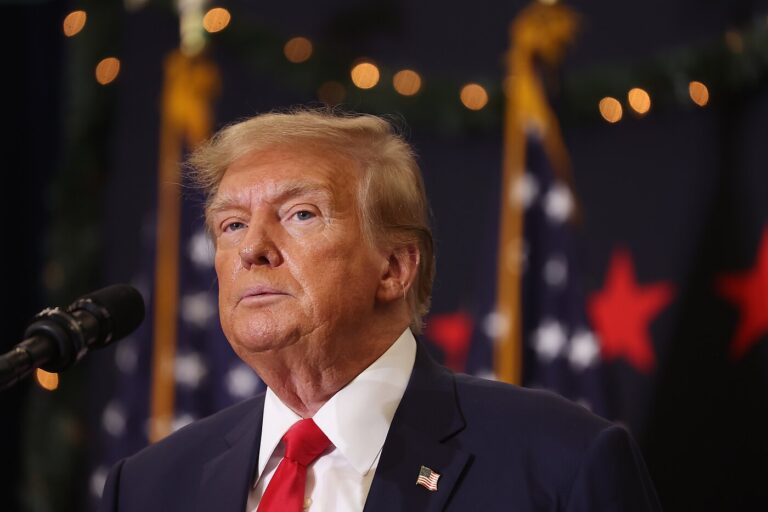
In the latest twist of a geopolitical drama that should have been de-escalated months ago, President Trump announced the deployment of two nuclear submarines to “the appropriate regions,” citing “highly provocative” statements from former Russian President Dmitry Medvedev.

This is not deterrence, it is panic, and it is exactly the sort of reaction Medvedev and Putin were baiting the United States into.

The Kremlin no longer needs to fire missiles or take new territory to rattle the West, it simply needs to provoke an overreaction. The idea that Trump would redeploy nuclear submarines in response to comments on Telegram and X (formerly Twitter) shows how easily the United States can be manipulated into strategic missteps. This is not strength, it is strategic fragility.

Let us be clear: this is not how nuclear diplomacy works. The Cold War’s most dangerous moments were marked by restraint and back channel diplomacy. Now we have nuclear deployments triggered by online rhetoric. It reflects an unmoored, weakened superpower projecting confusion rather than confidence.

And that confusion has roots deeper than just Putin’s psychological tactics.

Since the moral defeat of the United States and Israel during the 12-day Iran-Israel war, Washington’s global standing has taken a substantial hit. What was supposed to be a demonstration of technological and military superiority became an embarrassing showcase of vulnerability. The Iron Dome, David’s Sling, and even US supplied Patriot systems were tested, and found wanting. This war proved that US military power, once thought unassailable, is now predictable, exposed, and, in many cases, beatable.

Russia was watching closely. And unlike Ukraine, battered, fragmented, and reliant on Western supplies, Russia is learning, adapting, and now seemingly unfazed by threats from Washington. Putin knows the US arsenal, he has studied it in Ukraine, and now sees the cracks widening. His forces are better organised, equipped with effective countermeasures, and politically emboldened.

Now, even Trump’s desperate nuclear posturing and artificial deadlines are being ignored.

Putin, speaking from the Valaam Monastery with Belarusian strongman Alexander Lukashenko at his side, offered nothing but disdain for Trump’s latest ultimatum: a ceasefire in Ukraine by 8 August, or face new sanctions. “All disappointments arise from inflated expectations,” Putin said, brushing off Trump’s comments with the ease of a man who knows America’s bark no longer comes with a bite. Russia, he boasted, is “advancing on the entire front line.”

Lukashenko was even more blunt: “50 days, 60 days, 10 days, you don’t do politics like that.”

They are not just defying the United States, they are mocking it.

Trump’s countdown diplomacy, reduced from 50 days to just 10, has become an international joke. And with Russia intensifying drone strikes, devastating Kyiv, and deepening its grip on occupied territory, it is obvious Putin sees no reason to pause. On the contrary, he is accelerating.

Ukraine may still hold out hope for a negotiated settlement. But as President Zelensky hinted, Russia may simply be stalling talks to regroup, not to retreat. And with US diplomacy scattered, Trump’s special envoy flitting between Israel and vague promises of a Moscow visit, there is little to suggest Washington has any serious leverage left.

The outcome is as clear as it is dangerous:

Russia is emboldened

America is isolated

And Trump’s hollow threats have only exposed a global power in strategic retreat

This is not Cold War 2.0, it is worse. Because back then, the enemy respected the rules. Now, the United States is being toyed with, by men who smell weakness and are no longer afraid to exploit it.

Military Might Won’t Save NATO – Unity Will

General Alexus Grynkewich struck a confident tone as he took command of NATO’s military operations, declaring that today’s threats are “no match” for the alliance. But for all the military posturing, his comments betray a deeper misconception: military might alone won’t preserve NATO — economic unity and strategic coherence will. And both are visibly fraying.

This is the uncomfortable truth: NATO is not united, certainly not economically. President Trump, who appointed General Grynkewich, has spent years berating NATO members for not spending enough — yet simultaneously pummeled European allies with tariffs and now threatens further trade friction. An alliance that projects unity on the battlefield but fractures in the boardroom cannot be counted on in the long run.

If Trump really valued NATO’s strategic cohesion, he would have spared key allies from his economic crusades. But his rhetoric and policy suggest that economic cooperation is conditional and disposable — even among allies. This is not how a serious alliance functions.

Meanwhile, NATO’s adversaries aren’t just competing militarily — they’re winning economically. China, for example, has extended its global influence not by tanks or fighter jets, but through the Belt and Road Initiative, rare earths dominance, strategic port investments, and control of key supply chains. They’re playing a long game NATO doesn’t seem ready for.

And let’s not forget that Russia’s war in Ukraine — despite immense Western financial and military support — has not collapsed its economy. Quite the opposite: sanctions have forced Russia into deeper alignment with non-Western economies, creating a multipolar economic bloc that NATO, as a military entity, isn’t designed to handle.

Even the announcement of a new 5% GDP defence spending target shows where the thinking is stuck. Yes, deterrence matters. But throwing more money at weapons while your allies are alienated economically and politically misses the forest for the trees. As long as NATO thinks military power can substitute for economic resilience and political unity, it’s just rearranging the deckchairs.

The world is moving into an era where economic warfare — sanctions, supply chains, trade routes, energy control — will shape the outcomes of global conflicts as much as or more than missiles. NATO cannot afford to ignore this reality.

General Grynkewich may lead the alliance into its “dangerous future,” but unless that future includes a serious rethink of NATO’s political and economic strategies, even the strongest army won’t be enough.

The real national shame is Britain’s complicity in mass killing – not a chant at Glastonbury

The Chief Rabbi has described the words shouted at Glastonbury – “death to the IDF” – as a “national shame”. But I would argue that the real national shame is far worse, and far more enduring: our government’s continued complicity in mass killing through the provision of arms, political cover, and moral cowardice. What happened on that stage was not “vile Jew-hatred”. It was a protest against a military force carrying out a sustained assault on civilians. And for saying it out loud, the artist is now being investigated, smeared, and accused of incitement. That is shameful.

Let’s be absolutely clear about what was said, and what wasn’t. Bob Vylan did not chant “death to Jews”. He did not attack Judaism, Jewish culture, or the Jewish community. He attacked the Israeli military – the IDF – in blunt terms. Many of us might not have used those exact words, but the message behind them is undeniable: fury at a military force currently engaged in the destruction of Gaza, where entire families have been wiped out and where human rights organisations have warned of possible genocide. This is not fringe paranoia. This is the repeated assessment of the UN, of aid workers, of journalists on the ground.

And yet, instead of grappling with the horror of that war, we are told that the real threat to our country is a protest chant. It is a staggering moral inversion. It is also politically calculated. The aim is to shift focus away from the atrocities, and onto the critics. To police outrage. To sanitise protest. And ultimately, to protect Israel from the kind of condemnation that would be automatic if any other state had committed similar acts.

Ask yourself this: would there have been the same outrage if the artist had chanted “death to the Russian army”? Or “death to the Saudi regime”? Would the police be investigating, the Culture Secretary condemning, and public figures rushing to denounce it as hate speech? Of course not. This is a very specific, very selective outrage. And it’s being used to equate political protest with racial hatred – something that should deeply concern anyone who values free expression.

What’s even more disturbing is the implication that to criticise the Israeli military is to somehow offend Britain itself. That’s what lies beneath the Chief Rabbi’s words – his use of phrases like “our nation” and “national shame” while defending a foreign army. He is entitled to his opinion, as we all are. But when he speaks in a way that merges religious leadership with political advocacy for Israel, it blurs the line between faith and nationalism in a deeply uncomfortable way.

The Chief Rabbi does not speak for all Jews in Britain – many of whom are horrified by what Israel is doing in Gaza, and do not wish to see their religion used to justify or deflect from state violence. Nor does he speak for the broader public, who are increasingly seeing through the double standards and silencing tactics used whenever Israel is criticised.

What Bob Vylan did was uncomfortable, yes. Protest often is. It disrupts, it provokes, it calls things what they are. But his words reflect the anger and despair of many who feel powerless while watching scenes of death and devastation night after night. And in a country where our government continues to license weapons used in those bombings, where our politicians talk of Israel’s “right to defend itself” while entire neighbourhoods are obliterated, that anger is not just understandable – it is necessary.

We should be far more worried about the fact that protest is being criminalised, that speech is being surveilled, and that criticism of one particular state is increasingly off-limits. Britain is not supposed to be a place where artists are investigated for chanting against a foreign army. And yet here we are, with police forces reviewing live performance footage and ministers making political capital out of what was said on stage – while remaining silent about what is happening in Gaza.

There is a moral sickness at the heart of this conversation. And it lies not with a punk band shouting at a festival, but with those who would rather punish speech than confront complicity. We are being told that anger at mass killing is more dangerous than the killing itself. That chanting on a stage is more offensive than flattening refugee camps. That protest is the real threat – not the bombs, not the deaths, not the arms sales.

We are not fools. We see what is happening. And we see who is being protected.

The real national shame is not in Glastonbury. It is in Whitehall. It is in the silence of our opposition parties. It is in the calculations of our diplomats. And yes – it is in the statements of public figures who conflate a chant against soldiers with an attack on an entire people.

Enough. We must reclaim the moral ground. Criticising Israel is not antisemitism. Condemning the IDF is not hate speech. And expressing fury at injustice – especially in the language of protest and art – must never be treated as a crime.

If we allow it to be, then we really will have something to be ashamed of.

“Forever” Is a Lie: Zanu PF’s Arrogance Mirrors Rhodesia’s Demise

Opinion | The Zimbabwe Daily

When former army commander and now Sports Minister Anselm Sanyatwe told congregants in Nyanga that “Zanu PF will rule forever, whether you like it or not,” he may have thought he was speaking with authority. Instead, he exposed the very arrogance that has brought countless regimes to their knees.

His remarks, delivered during a Seventh-day Adventist Church event, rightly triggered backlash. The SDA Church, to its credit, quickly reaffirmed its apolitical position, made it clear the statements were unauthorised, and disclosed that Sanyatwe apologised. But the real issue here is not about protocol or pulpit ethics. It is about the dangerous fantasy of political immortality.

Let us not forget that Ian Smith once said there would never be black majority rule in Rhodesia, not in a thousand years. Yet he lived to see it happen in his own lifetime. What followed was the rise of Zanu PF. Today, its leaders make the same delusional claims of permanence that their former oppressors did. The irony is staggering.

History is filled with regimes that saw themselves as permanent. The Soviet Union. Apartheid South Africa. Rhodesia. All collapsed, often when their leaders least expected it. Power is never static. When politicians start proclaiming “forever,” they usually mean they fear the opposite.

Zanu PF might still dominate the ballot box for now, but nothing lasts forever. To claim otherwise is not only dishonest but also insulting to the intelligence of Zimbabweans who have endured decades of misrule, economic collapse, and empty promises.

Adding to the uncertainty, Zanu PF still has a succession crisis to resolve. President Emmerson Mnangagwa is constitutionally barred from seeking another term. If the party attempts to change the constitution and force him to stand again, it would come at a heavy price. His legacy, already fragile, would be irreparably damaged. He risks being remembered not as a transitional figure, but as another Mugabe. The reengagement agenda he has worked to promote would collapse overnight, and Zimbabwe would once again find itself viewed internationally as a pariah state.

On the other hand, if he stands down, the party faces serious internal strife. The unresolved rivalries within Zanu PF could cause it to implode. Even if it survives the transition, there is a high likelihood that the successor chosen may not command national support and could be easily defeated by a resurgent opposition. Either path presents enormous risks, and neither supports the illusion of unshakable dominance.

The pulpit is sacred. It is not a campaign rally. More importantly, Zimbabweans are not naïve. They know when fear is dressed up as confidence. Sanyatwe’s comment is not the voice of a secure party. It is the voice of one clinging to relevance.

The question is not if change will come, but when. And when it does, Zanu PF may well join the Rhodesian Front in the archives of political history, a distant memory of what once was and what should never be again.

The Unraveling Illusion: How Iran Turned a Strategic Defeat into a Narrative Victory

In an age dominated by high-tech warfare, real-time media spin, and shifting global alliances, the recent U.S. and Israeli strikes on Iranian nuclear facilities have been hailed in some corners of the West as a surgical display of deterrent power. But behind the headlines and carefully scripted press briefings lies a far more complex and damning truth: Iran may have just won this war, not through firepower, but through narrative mastery, strategic patience, and the West’s own contradictions.

A Strike Without Fallout

The attacks, led by U.S. B-2 stealth bombers and backed by Israeli intelligence, were reportedly aimed at Iran’s underground nuclear facilities. The message was clear: assert dominance, send a warning, and cripple any future nuclear ambitions. But the aftermath told a different story.

There were no signs of radiation leaks, no satellite detected contamination, and no regional panic. Iranian nuclear materials, if they were present, were either well protected, moved in time, or never there in the quantities suggested. Even amateur analysts noted the absence of any environmental alarms that would usually follow such an assault.

The U.S. Pentagon scrambled to reassure the public with briefings and animations of how their bunker busters work, but when you’re explaining, you’re losing. And Iran, with uncharacteristic restraint, simply stated the attacks failed. Silence became strategy, and uncertainty turned into strength.

The Death of a Deal

Much of this begins not in 2024, but in 2018, when then President Donald Trump unilaterally withdrew from the Joint Comprehensive Plan of Action (JCPOA), commonly known as the Iran nuclear deal. Under that agreement, Iran was prohibited from enriching uranium beyond 3.67%, a level suitable only for civilian power generation, and was barred from enrichment at Fordo for 15 years. In return, crippling economic sanctions were lifted.

By all accounts, including repeated IAEA reports, Iran was in full compliance. Yet Trump abandoned the deal, claiming it didn’t go far enough to prevent a pathway to a bomb. The U.S. reinstated sanctions. Iran, predictably, retaliated by stepping up enrichment. Still, it waited over a year before breaching limits. And yet, the narrative in Western media is often that Iran broke the deal, a claim that collapses under the weight of timeline and fact.

The Myth of Breach

You cannot breach an agreement that has already been torn up by the other party. And yet, coverage continues to describe Iran’s uranium enrichment as violations of the deal, without acknowledging that the U.S., not Iran, was first to abandon it.

By 2021, Iran resumed enrichment at Fordo and reached 60% purity, still short of weapons grade but alarmingly close. But if Washington hadn’t torpedoed the JCPOA, those events may never have occurred. It’s a diplomatic own goal, one that left the U.S. morally and strategically exposed.

Iron Dome and Irony

Meanwhile, Israel’s once vaunted Iron Dome was exposed during Iranian retaliatory drone and missile strikes. Swarms overwhelmed it. Cheap Iranian munitions launched in volume outpaced one of the world’s most advanced missile defense systems. The psychological effect was profound: if Iran can poke holes in the Iron Dome, so can its allies. So can its partners.

Even more damaging, Iran’s measured response, no dramatic escalation, no grandstanding, robbed Israel and the U.S. of the chance to control the story. In fact, Iran denied the IAEA further access to verify damage. This created a vacuum of information that played in Iran’s favor. No inspections, no Western confirmation, no ‘success’ headlines.

A Weaponized Narrative

This is where Iran’s quiet brilliance emerged. The Ayatollah’s statement, calm and cold, claimed Iran had emerged stronger. Trump, in contrast, invoked Hiroshima, clearly frustrated that his show of force had failed to produce shock and awe.

By bombing nuclear facilities without evidence of material destruction, the U.S. faced a double edged moral question:

  1. If there was nuclear material present, it was an act of environmental recklessness.
  2. If there wasn’t, then the attack was a hollow gesture, an expensive, high risk statement that achieved nothing.

Either way, the strike failed to shift the strategic balance. And Iran, sanctioned, encircled, and demonized, walked away looking composed and in control.

A Shift in Power Dynamics

Beyond Iran, this moment is significant for another reason: Russia and China were watching.

  • Russia, fighting a grinding war in Ukraine, is learning in real time how to adapt to Western weapons.
  • China is reverse engineering not just technology, but tactics, absorbing the mistakes of others before acting.

Both are gathering data, storing it, and preparing for scenarios where the U.S. no longer holds the technological edge it once assumed was unchallengeable.

The Limits of the B-2

Even the use of the B-2 bomber, the so called jewel of U.S. stealth technology, is instructive. While impressive on paper, the B-2’s dependence on refueling, escorts, and highly visible pre-launch preparations makes it far less stealthy in strategic terms. Military analysts, and even lay observers, spotted the U.S. buildup from bases like Chania in Crete.

If one person can piece together U.S. intentions from public flight data and unusual base activity, imagine what China’s satellite networks and AI enhanced surveillance can do.

America’s Strategic Exposure

The fundamental truth is this: the U.S. has built a military designed to fight elsewhere. Its strategy is based on power projection: bombing, invading, and policing other nations. It is not built for homeland defense. If the war came to American soil, the B-2 and systems like it would be largely irrelevant. Airfields would be targeted. Refueling logistics would collapse. And layered defenses, the kind China and Russia build at home, are largely absent across much of the continental United States.

The problem goes further. The same defensive systems exported or relied upon, like Iron Dome, David’s Sling, and Patriot missiles, have shown significant limitations. Their vulnerability to saturation, spoofing, or electronic disruption has been laid bare. If these systems struggle against Iran’s relatively modest capabilities, they would crumble against a peer adversary like China or Russia.

Trump’s own words seemed to validate this concern. When asked by a Ukrainian journalist about further U.S. air defense support, his response that Ukraine and Israel both need them and supplies are limited was telling. This wasn’t just about stockpile management. It reflected the fragility of the Western defensive arsenal. If these systems were truly as effective and abundant as advertised, there would be no fear of overcommitting. But Trump likely realizes that mass deployment would lead to mass exposure, and the last thing the U.S. wants is for Russia to decimate these defenses and deliver yet another blow to their already wavering credibility.

The Moral High Ground Lost

This is perhaps the most damning aspect of all. The West claimed moral superiority in the Iran confrontation. But by walking away from diplomacy, launching unilateral strikes, and then failing to show meaningful results, it has lost credibility.

Iran, for all its faults, played the long game. It took the hits. It denied inspectors. It controlled the narrative. And it left its adversaries arguing over bunker buster videos while the world saw a major power swing, not through bombs, but through perception.

Conclusion

This wasn’t just a military failure. It was a failure of messaging, of diplomacy, and of strategic foresight. In trying to send a message, the U.S. and Israel have instead revealed their limitations, and their adversaries are paying close attention.

History may record this not as a confrontation with Iran, but as the moment the world realized the West could no longer unilaterally control the story. And in that vacuum, a new narrative order is being written: one strike, one silence, one contradiction at a time.

Ceasefire or Surrender? How 12 Days of War Exposed Israel’s Strategic Weakness

After 12 intense days of conflict, a ceasefire has been declared. But beneath the headlines and official statements lies a harsher truth: this is not a triumphant pause but a reluctant retreat. For all the rhetoric of deterrence and strength, Israel emerges from this confrontation exposed, economically bruised, and strategically diminished.

A Reluctant Ceasefire, Not a Negotiated Peace

The timing of the ceasefire reveals much. With Israel’s economy buckling and military systems overstretched, it appears that external pressure, particularly from Donald Trump, provided an off ramp for Prime Minister Netanyahu. The offer was clear: step back now or face an economic tailspin alone. Netanyahu, often defiant, had no choice. This was not a choice made from strength, but from necessity.

The True Cost of 12 Days

While the headlines focused on missiles and Iron Dome interceptions, the economic toll went largely unreported:

  • Billions in infrastructure damage from precision strikes by Iran and its proxies.
  • Unsustainable expenditure on air defences, with each interceptor missile costing tens of thousands of dollars.
  • Fuel, logistics, and maintenance costs that drained military readiness.
  • A crippled civilian economy, with tourism halted, tech investment shaken, and reservists pulled from key industries.

Israel, a high functioning modern economy, cannot survive under siege. The myth of invulnerability has been shattered.

Netanyahu’s Pyrrhic Victory

In the short term, Netanyahu may claim a political win. He will posture as the leader who stood firm. But this illusion will collapse under the weight of reality:

  • Public services will be stretched as post conflict reconstruction begins.
  • Energy costs and inflation will bite an already stressed middle class.
  • Investor confidence, a cornerstone of Israel’s modern economy, is shaken.

The war may be paused, but the fallout is just beginning.

The Iron Dome Is Not Enough

Iran and its proxies have proven that even with advanced defences, Israel can be overwhelmed:

  • Saturation tactics exposed limitations in missile interception.
  • The threat of hypersonic weapons from Iran adds a layer of fear.
  • Proxies across the region are emboldened, seeing that pressure works.

The Iron Dome once symbolised total protection. It now represents a finite shield, not an impenetrable wall.

A Nation Exposed Without Its Allies

Perhaps the most damaging realisation of all: Israel is not self sufficient in war. It relies deeply on US intelligence, munitions, and political cover. This war made that dependency undeniable.

For Netanyahu, this is a strategic nightmare. His aggressive stance has left Israel alone at a moment when it needed the most support. And for Trump, delaying US engagement showed Netanyahu just how thin his leverage is.

Final Word

The ceasefire may stop the rockets, but it cannot stop the reckoning. Israel must now confront the limits of its military strategy, the vulnerabilities of its economy, and the truth that it cannot afford another war like this.

Was this a ceasefire or a surrender to reality?

Only the coming months will tell. But one thing is certain: the strategic landscape has shifted, and Israel’s adversaries are paying very close attention.