
There is a subtle but dangerous shift happening in the national conversation around constitutional amendments.
Some officials now suggest that public hearings are sufficient “consultation with the people” when it comes to extending presidential term limits or altering the system of electing a president.
Let us be very clear.
Public hearings are not a referendum.
They are not the same thing. They do not carry the same constitutional weight. And they do not represent the same democratic legitimacy.
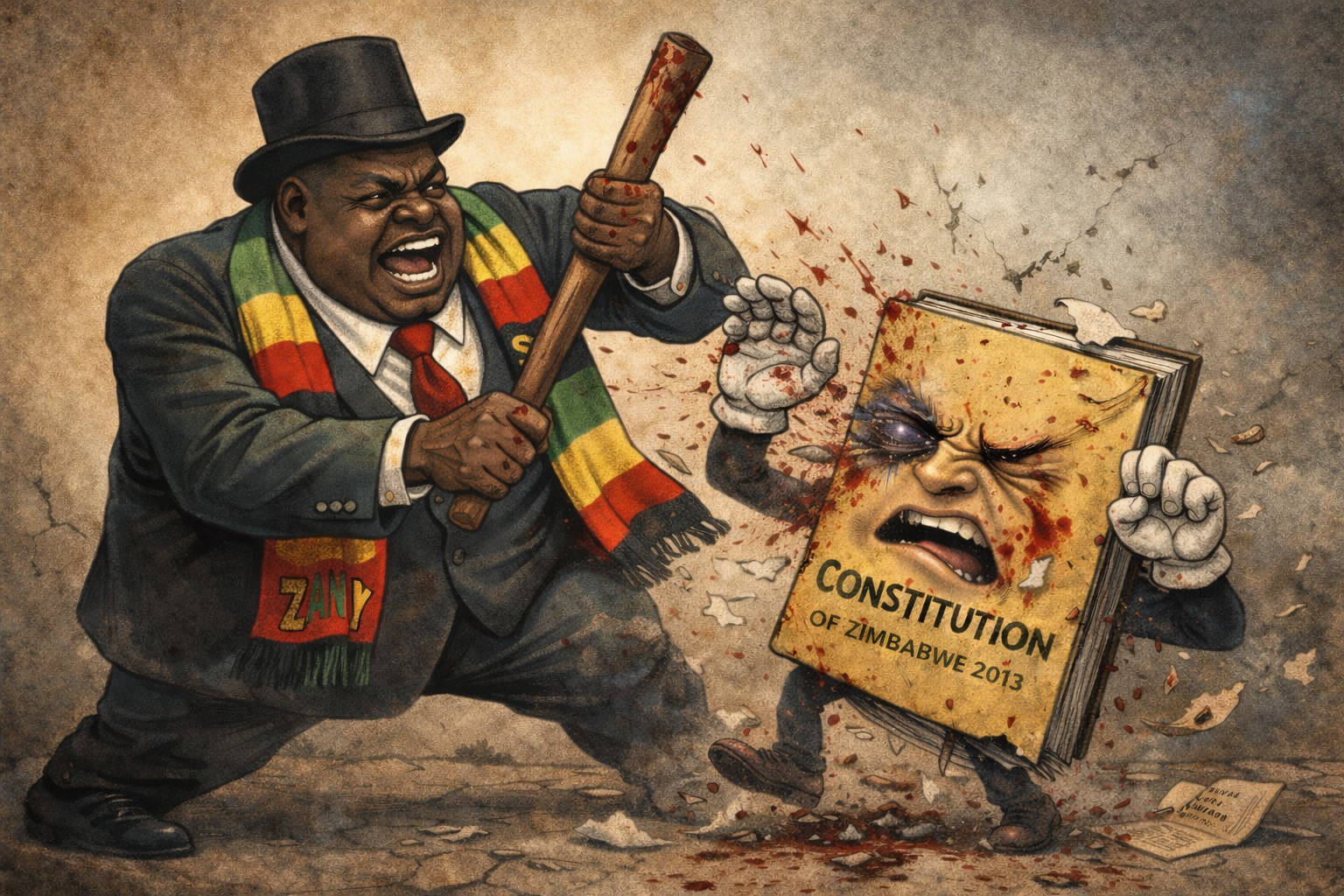
Zimbabwe’s 2013 Constitution provides two distinct amendment routes. Some sections may be amended through a two-thirds majority in Parliament. However, entrenched provisions, particularly those relating to presidential term limits and the structure of executive power, require more than parliamentary approval. They require a national referendum.
A referendum is not a consultation meeting.
It is not a party-organised gathering.
It is not a public hearing in a hall somewhere.
It is a nationwide popular vote where every registered citizen has the opportunity to decide directly.
When politicians begin emphasising “public hearings” instead of “referendum,” citizens must pay attention. Words matter. Process matters even more.
We inherited a parliamentary-style system in 1980, where executive authority functioned differently. It was ZANU-PF itself that later pushed for an executive presidency with direct election by the people. That change was presented as necessary for stability and clarity of leadership.
Now we are being told that shifting back to a parliamentary election of the president is somehow better.
What has changed?
If a directly elected president was the preferred model when it consolidated power, why is it suddenly inadequate now?
Is this about governance principles, or political arithmetic?
A directly elected president must win a popular vote. A parliamentary-elected president must secure loyalty inside the legislature. Those are not the same democratic tests.
A referendum, by its very nature, is unpredictable. It bypasses party structures and goes straight to citizens. That uncertainty is precisely what makes it democratic.
Public hearings, by contrast, can be managed. Attendance can be shaped. Narratives can be influenced. Outcomes can be interpreted selectively.
Calling consultation “people involvement” is not the same as giving citizens binding decision-making power.
Zimbabweans must understand the process clearly. This is not about panic. It is not about outrage. It is about constitutional literacy.
If term limits are to be changed, the Constitution sets out the mechanism. If the executive structure is to be altered, there is a process. That process must be followed in full.
Anything less undermines not just opposition politics, but the credibility of constitutional governance itself.
This is not the end of anything. It is the beginning of scrutiny.
And scrutiny is healthy in any democracy.
