

By Samuel Musarika
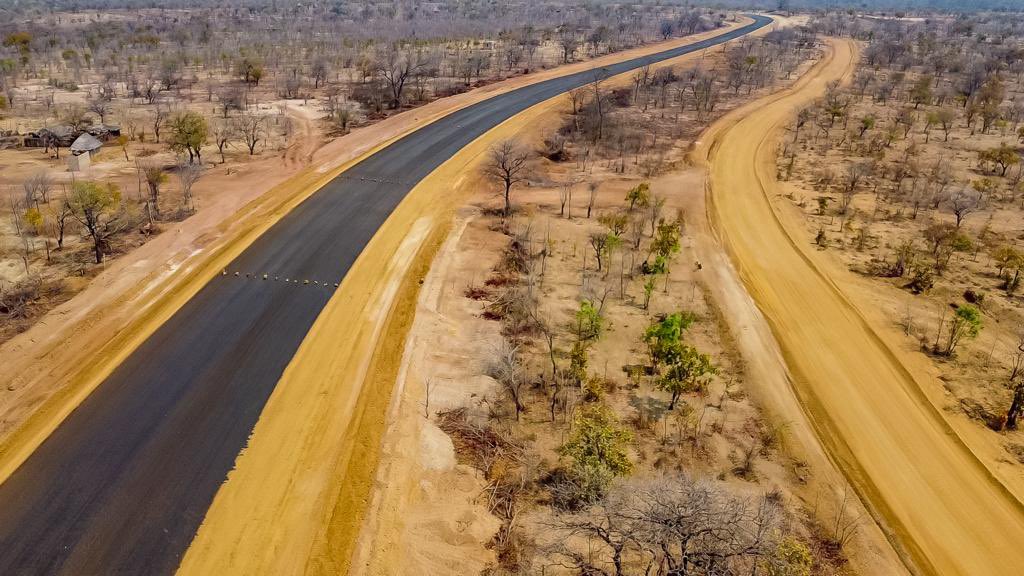
In recent months, there has been a visible surge in road construction across Zimbabwe. Images of smooth, newly paved highways are widely shared, often presented as evidence of progress and development. On the surface, these roads are indeed impressive. They are modern, well-finished, and long overdue in many areas.
But beneath this surface lies a more uncomfortable question. What happens next?
Zimbabwe has been here before.
Since 1980, the country has built roads, railways, and other critical infrastructure. At independence, Zimbabwe inherited one of the most functional transport networks in the region. Over time, more roads were added, and new projects were introduced. Yet today, much of that earlier infrastructure lies in a state of disrepair. Potholes dominate once-smooth roads. Entire stretches have become nearly impassable. The rail network, once a backbone of industry and logistics, has deteriorated significantly due to years of neglect.
The issue, therefore, is not whether Zimbabwe can build. It clearly can.
The real issue is whether Zimbabwe can maintain.
There is little value in constructing new roads while existing ones continue to crumble. Infrastructure is not a one-time achievement. It is a long-term commitment. Roads require regular maintenance, resurfacing, and repair. Without this, even the most well-built highways will eventually fail. When that happens, the country is forced to start over, often at a higher cost.
This creates a cycle of build, neglect, decay, and rebuild.
The same pattern is evident in the rail sector. Lines were constructed, used, and then largely abandoned without adequate maintenance. Today, instead of serving as an efficient transport system, much of the rail infrastructure is either underutilised or non-functional. The lesson is clear, building without maintaining leads to collapse.
There is also a financial dimension that cannot be ignored.
Many of these new infrastructure projects are being financed through borrowed money. Debt, by its nature, requires repayment. If infrastructure is not maintained, its economic value declines over time, making it harder for the country to generate the returns needed to service that debt. In simple terms, Zimbabwe risks borrowing to build assets that it cannot sustain.
This raises serious concerns about long-term economic sustainability.
Development is not defined by what is built today, but by what still works tomorrow. A newly constructed road is not a symbol of success if, ten years later, it is riddled with potholes and requires complete reconstruction. True development lies in durability, in systems that are maintained, managed, and preserved over time.
Zimbabwe does not lack the ability to build. It lacks a consistent culture of maintenance.
Until that changes, the country risks repeating the same cycle. New roads will become old roads. Old problems will return. And the promise of progress will once again fade into familiar decline.
The question is not whether roads are being built.
The question is whether they will last.
