

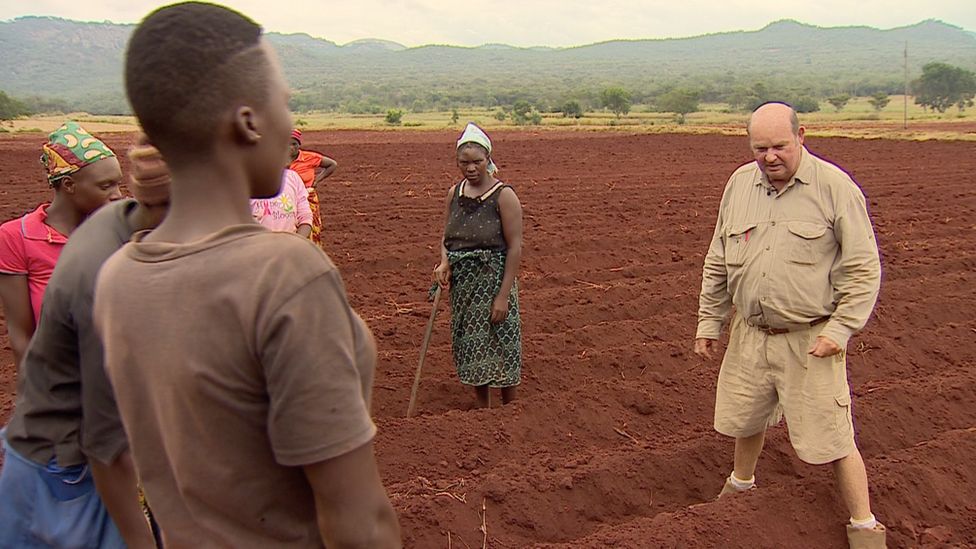
President Emmerson Mnangagwa has once again drawn criticism for defending Zimbabwe’s early-2000s Land Reform Programme, particularly his assertion that many white farmers who left believed themselves to be superior to African Zimbabweans. Predictably, the comment has been framed as racial provocation.
But strip away the outrage, and there is an uncomfortable truth worth confronting.
The issue was never only about race.
It was about power, hierarchy and entitlement.
Superiority complexes are not unique to white farmers. Most wealthy elites, regardless of race, develop them. Money, land and control distort perspective. What made white commercial farmers distinctive in Zimbabwe was not just wealth, but the historical context in which that wealth existed: a colonial system that explicitly ranked lives, labour and land value by race.
The land question cannot be separated from that reality.
If land reform were simply about access to land, alternatives existed. The United States, Australia and parts of Latin America have vast agricultural potential. Yet many farmers did not relocate there in large numbers. Why? Because those systems do not offer the same structural advantages: cheap, compliant labour, weak enforcement of worker protections and deep social hierarchies inherited from colonial rule.
In those countries, farm workers have rights, unions, minimum wages and legal recourse. The dynamic is different. Power is constrained.
That difference matters.
This does not justify violence. The land reform programme was chaotic, poorly managed and often brutal. People were killed. Livelihoods were destroyed. Institutions failed. The collapse of the willing-buyer, willing-seller framework, combined with international disengagement and domestic political pressure, produced a disastrous execution.
But acknowledging the failure of execution does not negate the legitimacy of the grievance.
Land did not belong to a race.
It belonged to Zimbabweans.
Mnangagwa is correct on one core point: those who were willing to exist on equal footing remained. Those who could not accept equality often left. That is not racial hatred. It is a statement about power relations.
Zimbabwe’s tragedy is not that land reform happened. It is that it was done without planning, accountability or protection for ordinary people, including farm workers who were abandoned in the process. The state lost control, war veterans filled the vacuum, and political survival overtook economic sense.
Yet the moral simplification pushed by Western media remains dishonest. The story is not one of innocent efficiency versus barbaric redistribution. It is one of unresolved colonial injustice colliding with a weak post-colonial state.
Sanctions followed, not because violence is unacceptable everywhere, but because violence that disrupts entrenched global economic interests is punished differently. Similar or worse abuses elsewhere are contextualised, softened or ignored.
Zimbabwe’s land question remains unfinished. Compensation is still owed. Productivity is uneven. Inequality persists. But pretending the pre-2000 status quo was morally sustainable is a fiction.
The uncomfortable reality is this:
Equality feels like oppression to those who were never meant to share power.
Mnangagwa deserves criticism for many things.
But on this point, the outrage says more about unresolved global hierarchies than about his words.
And until Zimbabweans are honest about land, labour and class, the debate will keep circling the same moral theatre without resolving the substance.
