
By Samuel Musarika
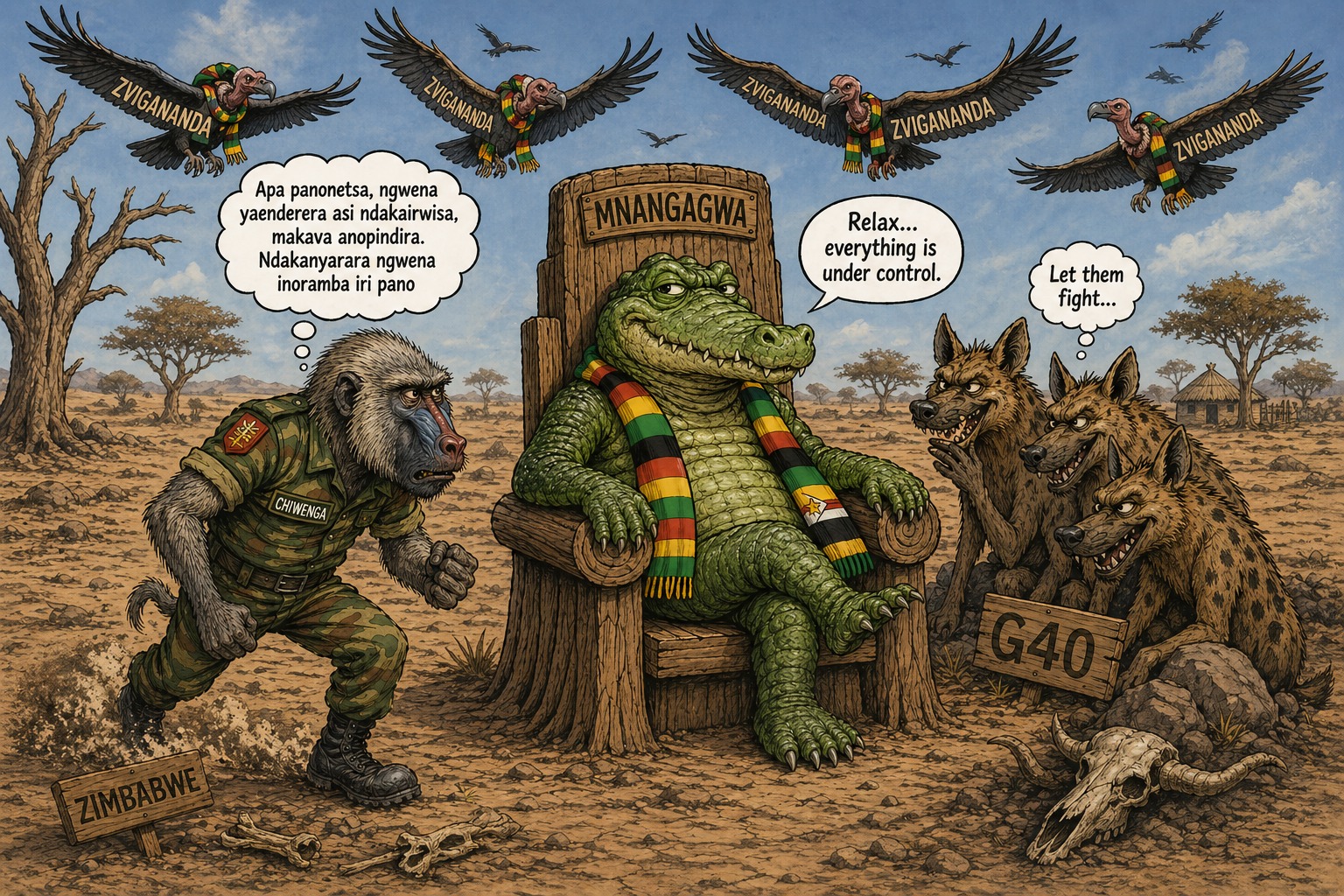
The prevailing narrative of a simple binary struggle between President Emmerson Mnangagwa and Vice President Constantino Chiwenga misses the structural complexity of ZANU-PF. Chiwenga’s inability to simply “take” power or halt the Constitutional Amendment Bill No. 3 (CAB3) is not merely a lack of will; it is a result of a sophisticated political “checkmate” designed to isolate the military wing.
1. The G40 Factor: The Enemy of My Enemy
Chiwenga is not just fighting Mnangagwa; he is navigating a landscape still haunted by the G40 (Mugabe loyalists). Figures like Jonathan Moyo have adopted a posture of tactical support for the “ED2030” agenda. This support isn’t born of loyalty to Mnangagwa, but of a deep-seated vendetta against the man who led the 2017 tanks. By backing CAB3, which aims to “elongate” the electoral cycle and replace direct elections with parliamentary selection, the G40 remnants ensure the “military faction” remains locked out of the presidency indefinitely.
2. The Triangular Deadlock
ZANU-PF is currently balanced on a tripod of three major interests:
– The Lacoste Core: Mnangagwa’s administrative and patronage network.
– The Military Wing: Chiwenga’s traditional power base.
– The G40/Bureaucratic Remnants: Those who favour “order” and party survival over a return to military intervention.
Chiwenga cannot move against the President without risking a total party fracture. If he attempts another intervention, he faces being shut out by the very party machinery that “legitimised” the first coup. ZANU-PF has shown that it values its own survival above any individual; if Chiwenga breaks the rules of the game again, the party is likely to close ranks around a civilian successor to protect its institutional interests.
3. The Civilianisation Trap
Perhaps the most brilliant “power move” in this saga was the transition of Chiwenga from General to Vice President. While it looked like a reward, it was effectively a disarming manoeuvre. Hardware vs. Software: As a General, Chiwenga held “hard power” (the guns). As a VP, he was moved into the realm of “soft power” (the party constitution).
– Bureaucratic Neutralisation: By forcing Chiwenga to trade his uniform for a suit, Mnangagwa subjected him to the party’s disciplinary codes and administrative hierarchies.
4. The Legitimacy Gamble
While Chiwenga enjoys a degree of public “romanticism” as the man who ended the Mugabe era, a second move would carry none of that original lustre. By 2026, the public is weary of “transitional” rhetoric. For Chiwenga to succeed now, he would either have to:
– Rule by Force: Establishing a hard military junta, which would trigger total international pariah status and SADC intervention.
– Align with the Opposition: A “black swan” move that could theoretically legitimise a transition but would require a near-impossible bridge between the military and those they have historically suppressed.
