Home Blog Page 9

Dangarembga returns to the limelight

0

Staff Reporter – The Zimbabwe Daily

Harare, Zimbabwe – After close to 25 years since she was last involved in the making of a feature film, Tsitsi Dangarembga, the internationally acclaimed writer, film director and activist has hinted on releasing two feature films and a series.

 “I am currently fundraising for two feature films which are ready to go into production and one series which is ready to go into pre-production. I also have a couple of other scripts which are in late development,” said Dangarembga.

However, despite the tenacity she has shown and the amount of energy she has contributed in the film sector, Dangarembga is not that optimistic about the local film industry.

“Globally the film industry is burgeoning however, this is not the case in Zimbabwe. Prospects for the film industry in Zimbabwe are poor, like everything else, a film industry can only flourish where there is political will to have a flourishing professional industry. This is not the case in Zimbabwe. 

Here everything is run on political patronage or on development lines.  Both practices ensure that no film industry can flourish.  Therefore, we have to see the lack of a film industry in Zimbabwe as being by design of all those institutions which currently finance film in the country,” said Dangarembga.

Dangarembga is well known for her involvement in the 90s films such as Neria and Everyone’s Child which many Zimbabweans still reckon.
Contentions over South Africa’s US$4.3 billion dollar loan

0

Staff Reporter – The Zimbabwe Daily

Johannesburg, South Africa – The recently unveiled US$4.3 billion loan from the International Monetary Fund (IMF) has created a lot of contention within the South African midst.

Although the loan is aimed at stimulating part of the country’s US$30 billion COVID-19 economic package, many have seen it as a wrong turn by the government.

“We are not in approval of the IMF loan because we look at the history of their loans in Africa with their structural adjustment programs which cripple country’s economies like in the case of Zimbabwe.

These structural adjustment programs also create dictatorships. Another thing, loans of this magnitude tend to spill out to other future generations so this IMF loan is  not a victory,” said Alex Mashilo, South African Communist Party (SACP)’s national spokesperson.

The third largest political party in the country, the Economic Freedom Fighters (EFF) said in a statement that this was the “biggest political blunder the ANC has made since 1994.”

Lumkile Mondi a senior lecturer at the School of Economics and Business Science at the University of the Witwatersrand also castigated the move and highlighted that corruption was looming, “the ANC is on a looting spree.”

However, National Treasury director-general Dondo Mogajane, said the loan was going to serve its purpose as they will be keeping a close eye on it.

Youthfulness attributed to South Africa’s low mortality rate

0

Staff Reporter – The Zimbabwe Daily

Pretoria, South Africa – Prof. Salim Abdool Karim, chairperson of the Covid-19 ministerial advisory committee has attributed South Africa’s low COVID-19 mortality rate to the youthful nature of much of the country’s population.

More than a third of the country’s populace are youths, which has relatively contributed in the low COVID-19 mortality rate as youths are not that susceptible to COVID-19.

Although the country ranks fifth in the world in terms of COVID-19 cases with close to 450 000 recorded, the COVID-19 mortality rate is far much lower at just under 7 000 with a recovery rate of close to 60 percent.

“The reason why we have a low COVID-19 mortality rate is because of our youthful population, also prior to the lockdown, we made sure we had enough beds and ventilators,” said Prof. Karim.

South Africa is expected to reach its COVID-19 peak beginning next month until the end of September.

Local environmentalists credit global lockdown

0

Staff Reporter – The Zimbabwe Daily

Harare, Zimbabwe – Some environmentalists have attributed the current global sanitary status to the various global lockdown regulations that are currently in place.

To date, this has seen a significant reduction in carbon emissions and litter which affects much of the global environment.

Animals and plants in the marine and wild have significantly benefited from the low carbon emissions and litter.

“Greenhouse effects cause things like desertification which leads to  poverty and hunger especially for countries that rely on Agriculture as the backbone of their economy like most countries in Africa.

So the various global lockdown regulations have done more good in terms of the reduction of pollution through chlorofluorocarbons thereby giving the ozone layer time to heal.

Some scientists actually argue that if the situation of these various lockdown regulations remains till 2030, there might be a full restoration of the ozone layer,” said Tafadzwa Machamire, an environmentalist.

Lawrence Mashungu, a climate scientist, also acknowledged the role of the various global lockdown regulations in mitigating climate change.

“In terms of carbon emissions there has been reduced economic activities which drive the emissions largely in industries and of course the transport sector.

Moreso, Zimbabwe recently launched the National Renewable Energy and the Biofuels Policy which is a good gesture pointing to the future powered by Renewable Energy.

In addition to that, the government has also developed the Low Emission Development Strategy pointing to the green future,” said the climate scientist.

Cricket South Africa tightens screws on racism

0

Staff Reporter – The Zimbabwe Daily

Johannesburg, South Africa – Following former South Africa’s senior cricket “Proteas” fast bowler, Makhaya Ntini’s testimonial on racism, Cricket South Africa (CSA) has decided to intensify its prowess on the issue.

Ntini was the first ethnically black player to play for the Proteas from 1998 to 2009. During that time, he went through a lot of racism which made him feel inferior and small. Regardless of that, Ntini continued to execute his national duties spectacularly.

However, Dr. Eugenia Kula-Ameyaw, Independent Director and Transformation Chair of CSA said they were going to take stringent measures against any form of racism.

“I cried when I heard the testimony of Makhaya unfortunately what happened to him is still happening because people are not being held accountable. We need to change that and we have the power to do that, we need to create a sense of belonging,” said Dr. Kula-Ameyaw.

The issue of racism in South African sports is still rampant especially in sporting activities such as cricket and rugby. Current South Africa’s rugby captain, Siya Kolisi also spoke out on going through racism within the rugby midst.

Ramaphosa’s woes as public schools are closed for four weeks

0

Staff Reporter – The Zimbabwe Daily

Pretoria, South Africa – Yesterday President Cyril Ramaphosa announced the closure of  public schools for four weeks.

Prior to the announcement, all schools were allowed to reopen on the eight of June through a gradual phasing in of grades but due to public outcry as a result of  COVID-19 which has infected 408 052 with 6 093 succumbing to it, the President saw it befitting to temporarily close all public schools.

“The health and wellbeing of learners and educators is critical. The Ministry of Basic Education met with more than 60 stakeholders although it was difficult to find a consensus we have decided that all public schools should close for four weeks from the 24th of July to the 27th of August.

Grade 7 and 12 learners will close on the 27th of this month. Grade 12 learners will have a one week break and return back on the third of August and grade 7 learners will have a two week break and come back on the 10th of August.

The academic year will also be extended beyond 2020. We want to make sure schools don’t become areas of transmission,” said the President.

Although many parents were calling for government to follow in the footsteps of countries like Kenya and Nigeria which have already suspended their 2020 academic year, contentions have now risen on why only public schools should be temporarily closed whilst the private schools remain open.

However, Hubert Mweli, Director-General of the Department of Basic Education said there wasn’t anything sinister about the President’s announcement.

“There are 23 400 public schools and 1 800 private schools. The issue of inequality has always been there and it won’t be solved in a week or two.

Moreso, the academic calendar of private schools is different from public schools and some of the private schools had already gone on a two week break prior to the President’s announcement.

Another issue, the private schools are unable to pay salaries if they remain closed which is a different setup with public schools.

We also realised that schools cannot be entirely closed as they will be prone to vandalism plus the feeding scheme has to continue,” said the Director-General.

However, National Professional Teachers’ Organisation of South Africa (NAPTOSA)’s  Executive Director, Basil Manuel and the General Secretary of the National Association of School Governing Bodies (NASGB), Matakanye Matakanya said they will be seeking further clarity from the Minister of Basic Education, Angie Motshekga.

South Africa cuts more interest rates

0

Pretoria, South Africa

Yesterday, Lesetja  Kganyago, Governor of the South African Reserve Bank (SARB) announced the cut in interest rates by another 25 basis points.

To date, the SARB has had to cut interest rates by 300 basis points due to the economic impact of COVID-19.

Although the measures taken by the SARB are of a relief to many creditors, some of the country’s economists wanted the SARB to implement more measures.

“It’s a very disappointing move by the SARB for the interest rates not to be adjusted in accordance with the inflation rate it is not right.

The move is not going to do much to revive our economy. Interest rates should actually come lower to the level of our inflation rate or drop it to zero. It’s just a matter of austerity by the Reserve Bank.

I also believe it’s now time for the  Reserve Bank to introduce quantitative easing, there is no resurgent inflation associated with that,” said economist, Duma Gqubule.

Another economist, Isaac Matshego, also said the SARB’s stance on interest rates was not going to assist much of the economic crisis in the country.

“The move by Governor Kganyago is not going to last for a long period. People are losing jobs and unemployment is surging this should be the main point of focus,” said Matshego.

Former Studio 263 actor optimistic about Zimbabwe’s future

0

Staff Reporter – The Zimbabwe Daily

Harare, Zimbabwe – Ben Mahaka formerly known as Tom Mbambo in the local soapie Studio 263, has expressed optimism over the country’s film industry.

Although the country hasn’t produced a lot of films that have made it into international cinemas, Mahaka said the time for the country to make its mark on the international stage was imminent.

“I believe the prospects of film are good. The cost of entry into that space has come down dramatically and our universities are starting to deliver graduates who can make films.

What has changed is the distribution landscape. We have woken up to the viability of YouTube as a monetized distribution platform for series and more filmmakers are exploring it, especially after the success of College Central’s Wadiwa wepa moyo.

Moreso, I think there will always be a place for feature films. There are guys like Joe Njagu and Melgin Tafirenyika who are successfully making features. College Central is also working on a feature so feature films are here to stay.

On my side, I have projects planned. I am currently editing a documentary film and I hope to shoot a feature in Chipinge  come 2021. I am also looking forward at doing more seasons of Gaza,” said Mahaka.

Zimbabwe’s first Netflix Original film Cook Off, which premiered earlier this year has opened up doors for the country’s film industry.

Diabetics prone to COVID-19

0

Staff Reporter – The Zimbabwe Daily

Johannesburg, South Africa – According to Dr Adri Kok, a specialist physician, people with diabetes are at a higher risk of being affected by COVID-19.

Dr Kok made the revelation in relation to the current COVID-19 crisis in South Africa which has since infected more than 300 000 people.

“People with diabetes are prone to COVID-19. Type two diabetes is the most prevalent in South Africa with 30 percent of the population being diabetic or obese.

Moreover, for people who are diabetic, the virus gets into the blood and forms blood clots which affect the kidneys, arteries and veins. So people with diabetes are at a higher risk of being affected by the virus that’s why they have to constantly check their sugar levels.

Moreso, clinics and hospitals don’t have enough resources to cater for their needs,” said the specialist physician.

COVID-19 disrupts SADC’s first car

0

Staff Reporter – The Zimbabwe Daily

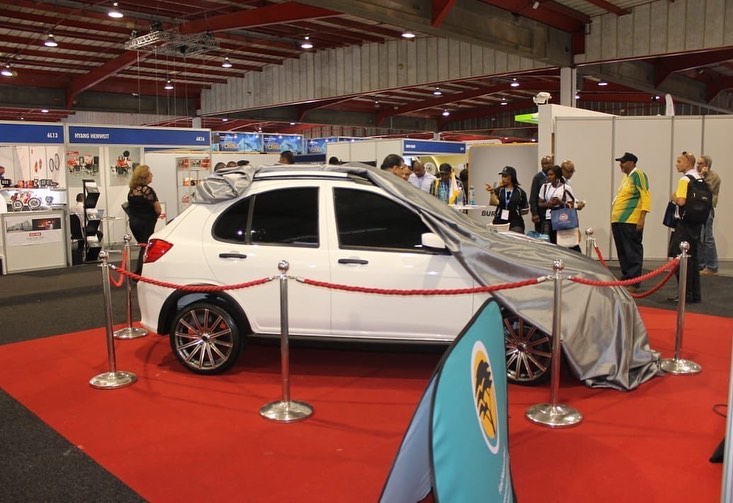
Ekhurhuleni, South Africa – SADC’s first car, the Mureza Prim8 has suffered a huge setback due to the COVID-19 pandemic.

By now the Mureza Prim8 should have made its way into the market but due to the COVID-19 pandemic those plans have had to be rescheduled.

“COVID-19 has impacted the whole world. Nations have not been spared. We are adjusting to the new situation and finding the opportunities.

Moreso, an announcement will be made about our official launch soon. It’s hard to fore-tell as the governments are battling to balance economy and saving humanity.

However, prices will be available on our website as well as an online ordering system for the different models.

Moreover, we have plans of launching in all SADC countries including Zimbabwe. Again, details will be published on our website and social media,” read a statement from Mureza.