Home Blog Page 2

Why Extending Mnangagwa’s Term May Be the Least Bad Option Right Now

0

By Samuel Musarika

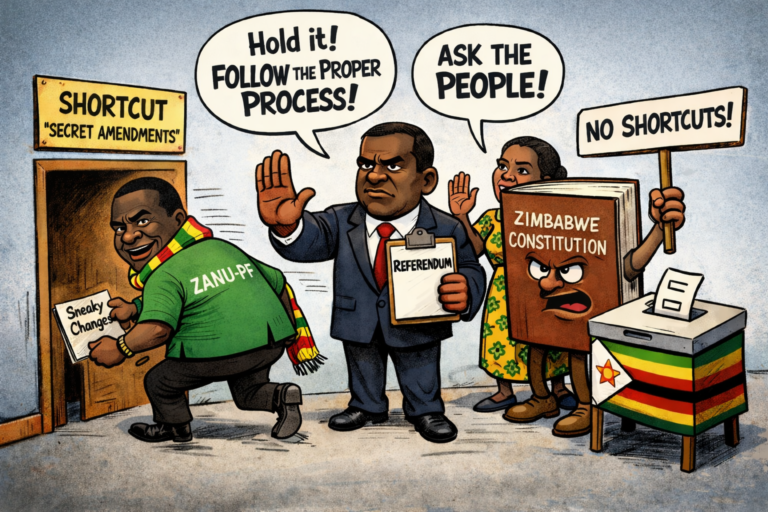
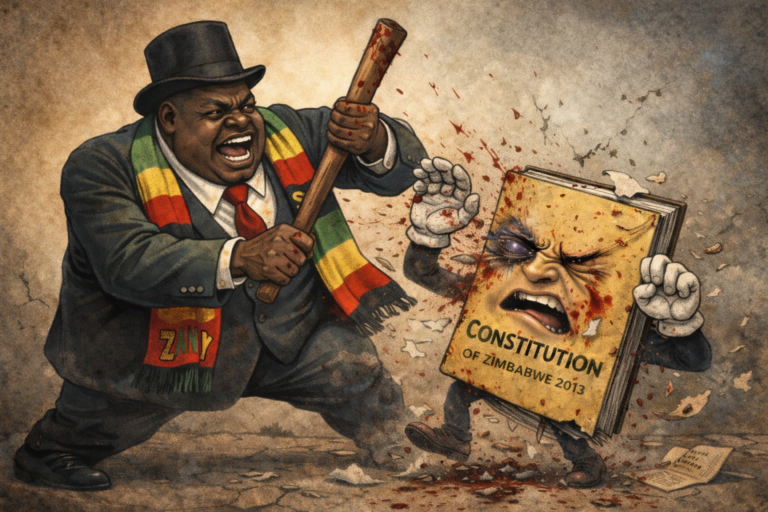
The suggestion that Zimbabwe’s Constitution could be amended to extend President Emmerson Mnangagwa’s term has triggered predictable outrage. The language used by Justice Minister Ziyambi Ziyambi has not helped. Declaring that only God’s laws are immutable is theatrically reckless and constitutionally crude.

But strip away the theatrics, and a harder question remains. Not whether constitutional term limits matter, they do, but whether changing leadership now would materially improve Zimbabwe’s situation.

Uncomfortably, the answer may be no.

The first reason is the absence of a credible opposition. Zimbabwe does not currently have an opposition that looks remotely ready to govern. Fragmentation, ego battles and ideological incoherence dominate opposition politics. If parties cannot unite themselves, it is unrealistic to expect them to unite a deeply polarised country.

This is not praise for ZANU PF. It is a statement of comparative reality. Like it or not, ZANU PF remains the only nationally cohesive political structure in the country. Leadership transitions do not happen in vacuums. They happen within systems. Right now, there is no alternative system capable of absorbing power without chaos.

Second, Zimbabwe is stable. Not prosperous, not thriving, but stable. Projects are ongoing. Institutions, however imperfect, are functioning. There is no mass unrest, no civil conflict, no collapse of order. Changing leadership in such a context is not automatically virtuous. It carries real risk, especially when the likely successors are themselves locked in factional battles.

Vice-President Constantino Chiwenga looms large in these succession calculations, and the internal fear among business-linked elites says less about constitutionalism and more about unresolved power struggles within the ruling party. Stability, however fragile, is still stability.

Third, elections are expensive. This is an unfashionable argument, but an honest one. Zimbabwe is rebuilding from decades of economic damage. Elections drain state resources, distract institutions and frequently produce contested outcomes that require even more money to manage. In a country still grappling with debt, infrastructure decay and service delivery challenges, bleeding scarce resources for an election that changes little may be an indulgence.

None of this means constitutionalism should be discarded casually. The 2013 Constitution was hard-won, and constitutional manipulation has a dangerous history in Africa. Legal experts such as Lovemore Madhuku are right to warn that amending term limits or extending parliamentary life is procedurally complex and politically risky.

But politics is not theology. Constitutions are social contracts, not sacred texts. They exist to serve societies, not to paralyse them when circumstances are unfavourable.

The real danger is not amendment per se. It is amendment without honesty. If the case for extension is stability, continuity and cost-saving, then it should be argued openly, not smuggled through slogans about inheritance or divine authority.

Zimbabwe’s problem has never been a shortage of elections. It has been a shortage of credible alternatives, disciplined governance and institutional trust.

Until those fundamentals change, insisting on rotation for its own sake may satisfy principle while worsening reality.

Extending Mnangagwa’s term may not be ideal.
But in the current political landscape, it may be the least disruptive option available.

And sometimes, in fragile states, politics is not about ideal choices.
It is about choosing the option that breaks the least.

Air Zimbabwe Should Not Touch the London Route – Not Yet

0

The announcement that Air Zimbabwe plans to resume flights to London after more than a decade should be treated with extreme caution. Not because international ambition is wrong, but because this particular route is a graveyard for weak airlines with thin balance sheets and fragile reputations.

The Harare–London route is not the prize it is being sold as.

In today’s aviation market, London is one of the most competitive long-haul destinations in the world. Airlines do not succeed on nostalgia or symbolism. They succeed on reliability, frequency, service quality and trust. Air Zimbabwe currently has none of those at the level required to survive this route.

The idea that direct flights are in high demand is simply not supported by market behaviour. If they were, British Airways would have already reactivated the route. It has not. That alone should be instructive.

Most travellers between Zimbabwe and the UK already have workable, well-established alternatives. Qatar Airways, Emirates and Kenya Airways dominate this corridor with strong global networks, modern fleets, premium cabins, dependable schedules and competitive pricing. Yes, they are indirect. But for the majority of passengers, a two- or three-hour connection is a non-issue when weighed against comfort, reliability and service.

Direct does not automatically mean desirable.

Long-haul routes are brutally expensive. Wide-body leasing, fuel costs, crew rotation, maintenance reserves, insurance, Heathrow slot constraints and passenger load risk all combine to make this one of the hardest routes for a marginal airline to sustain. A single technical issue can wipe out weeks of revenue. Established carriers absorb that risk. Air Zimbabwe cannot.

The danger here is not failure. It is predictable failure.

Air Zimbabwe’s priority should be much closer to home. The airline needs to rebuild credibility in the domestic and regional market first. That means reliable schedules, clean aircraft, consistent ticketing systems, professional customer service and operational discipline. These are unglamorous goals, but they are the foundations of a functioning airline.

Selling dormant wide-body aircraft to modernise domestic operations makes sense. Leasing a Boeing to chase prestige does not.

A strong domestic airline creates trust. Trust creates demand. Demand eventually justifies expansion. Skipping steps and jumping straight to London reverses that logic and invites collapse.

There is also a strategic misreading of what Zimbabwe needs from its national carrier. The role of Air Zimbabwe should not be to compete with global premium airlines on intercontinental routes. It should be to connect cities, support tourism internally, link regional hubs and provide dependable airlift where private carriers will not.

That is where national airlines add value.

London is not underserved.
Zimbabwe is.

Until Air Zimbabwe proves that it can fly Bulawayo, Victoria Falls and regional routes consistently and profitably, a return to London is not ambition. It is vanity.

Air Zimbabwe does not need a flagship route.
It needs a reputation.

And reputations are not built at 35,000 feet over the Atlantic. They are built flight by flight, at home, where mistakes are survivable and lessons can actually be learned.

For now, London should wait.

Low Inflation, High Debt: Why Zimbabwe’s Creditors Are Knocking Again

0

Just as Zimbabwe is being told to applaud single-digit inflation, reality has arrived in the form of court papers.

Libya’s central bank has taken Zimbabwe’s finance minister Mthuli Ncube and the National Oil Infrastructure Company of Zimbabwe to the UK High Court, seeking more than US$100 million in unpaid debt. It is the latest reminder that macroeconomic calm means very little when a country cannot service what it owes.

This is not a new problem. It is an old one resurfacing because Zimbabwe has never dealt with it properly.

According to the filing, loans dating back to a 2001 fuel credit facility were guaranteed by the Zimbabwean state. Over two decades later, only US$5.5 million has been repaid. With interest, the liability now exceeds US$100 million. That debt has survived multiple administrations, currency resets and economic narratives, quietly compounding in the background.

Zimbabwe today remains locked out of international capital markets because of more than US$21 billion in unpaid obligations. Arrears to multilateral lenders stretch back 26 years. Private creditors continue to circle. Fuel traders, commodity houses and former commercial farmers are all owed money. Inflation statistics do not make these claims disappear.

This is where the limits of paper economics become obvious.

Low inflation is often presented as a gateway to recovery. In Zimbabwe’s case, it does not unlock borrowing, restore trust or reopen capital markets. Creditors do not price risk based on CPI charts. They look at repayment history, legal enforcement and political credibility. On those measures, Zimbabwe remains radioactive.

The Libyan case also exposes a deeper contradiction in government messaging. On one hand, authorities speak of stabilisation, discipline and reform. On the other, they are being sued abroad for debts acknowledged repeatedly since 2005 and still unpaid. Stability without solvency is not reassurance. It is delay.

Even efforts to creatively settle debts underline the desperation. Zimbabwe’s reported talks to repay Trafigura Group with gold and nickel point to a country short of cash and credibility. Asset-based repayment is not strategy; it is constraint.

The unresolved compensation agreement with former commercial farmers is another example. A US$3.5 billion deal was signed, then effectively parked. The message to creditors is consistent: agreements can be made, but enforcement is uncertain.

Inflation control does nothing to change that perception.

In a stagnant economy, low inflation often signals suppressed demand rather than renewed confidence. People are not spending because incomes are weak. Businesses are not expanding because capital is unavailable. The state is not borrowing because no one trusts it to repay. That is not macroeconomic success. It is macroeconomic containment.

Debt, unlike inflation, does not respond to optimism. It responds to payment.

Zimbabwe’s real economic bind is not price instability. It is credibility. Until the country demonstrates a clear, enforceable path to clearing arrears, restructuring obligations and honouring guarantees, creditors will continue to seek relief wherever they can find it, including foreign courts.

The Libyan lawsuit is not an outlier. It is a warning.

You can stabilise prices.
You can redesign currencies.
You can rebrand economic policy.

But if debts remain unpaid, the past will keep returning, interest added, summons in hand.

Zimbabwe’s crisis has never been just about inflation. It has always been about trust. And trust, once lost, cannot be statistically engineered back into existence.

Selective Outrage Is Corroding Western Credibility

0

By Samuel Musarika

One of the quiet scandals of modern Western coverage of war and protest is not what is reported, but how certainty is rationed.

Consider Iran. When protests erupt, Western outlets and NGOs routinely report precise death tolls with confidence. The US based Human Rights Activists News Agency can “confirm” thousands of deaths, often down to specific figures, even amid internet shutdowns, mass arrests, and opaque state repression. These numbers are treated as authoritative, repeated without ritual caveats, and woven directly into headlines.

Now consider Gaza.

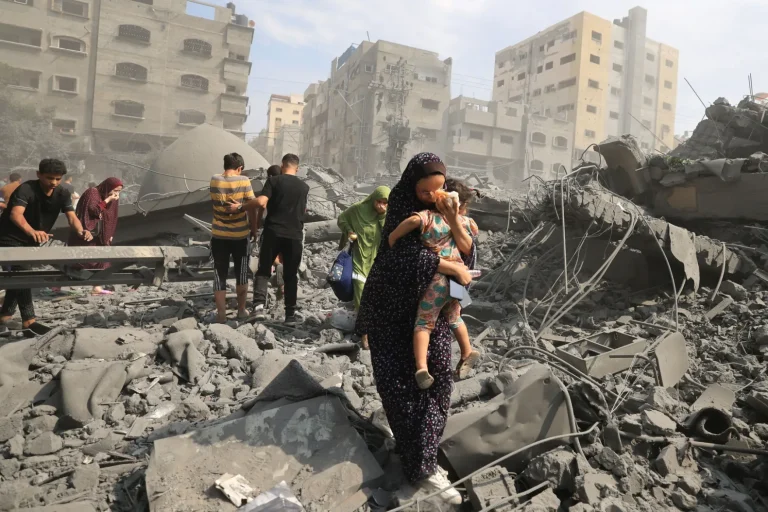
Suddenly, certainty evaporates. Death tolls become awkward. Numbers are hedged, bracketed, distanced. We are told, again and again, that figures come “according to the Hamas run health authority”, as if this phrase alone were enough to suspend normal standards of reporting. Outlets such as the BBC repeat this formulation relentlessly, even when the same data is later corroborated by the United Nations, international medical organisations, satellite analysis, and on the ground journalists.

The question is not whether scepticism is appropriate. It always is. The question is why scepticism is applied selectively.

If casualty figures emerging from Iran can be treated as credible despite severe information constraints, why are figures from Gaza treated as uniquely suspect, even when produced by a functioning civil health system with decades of historical reliability? Gaza’s health authorities have, across multiple conflicts, produced figures later found to be broadly accurate by independent investigators. Yet the ritual disclaimer persists, functioning less as transparency and more as a moral distancing device.

This is not neutral journalism. It is narrative signalling.

By constantly qualifying Palestinian death counts while reporting Iranian figures with confidence, Western media implicitly tells audiences whose suffering is trustworthy and whose is perpetually in doubt. The effect is cumulative. It does not merely inform; it conditions.

The role of NGOs compounds the problem. Organisations that rightly demand evidentiary rigour in some contexts appear strangely comfortable with uncertainty in others. The standards shift depending on the geopolitical sensitivities involved. Where Israel is concerned, the burden of proof becomes infinite. Where its adversaries are concerned, inference becomes acceptable.

This double standard does not protect truth. It undermines it.

Worse still, it corrodes the very idea of a rules based international order. If civilian deaths only “count” when they occur under the right political conditions, then international humanitarian law becomes performative rather than universal. Law turns into language, and language into cover.

Defenders of this practice argue that Gaza is “different” because of Hamas. But this argument collapses on inspection. Health data does not become invalid because a governing authority is politically objectionable. If it did, vast swathes of global health reporting would cease overnight. Journalists do not stop reporting hospital deaths in authoritarian states simply because they dislike the government in power.

The deeper issue is not Hamas, or Iran, or Israel. It is Western discomfort with moral consistency.

Acknowledging the scale of civilian death in Gaza forces uncomfortable questions about complicity, arms sales, diplomatic cover, and selective enforcement of international law. Qualifying the numbers allows those questions to be deferred indefinitely. “According to” becomes a way of saying, this matters less.

This matters enormously in the current global climate. As Western governments lecture others on human rights while tolerating or enabling violations by allies, their credibility erodes. Figures like Donald Trump do not create this hypocrisy. They exploit it. When international norms are already bent, it becomes easy to snap them entirely.

Journalism and human rights advocacy do not need to abandon scepticism. They need to apply it evenly.

If numbers can be trusted in Tehran, they can be interrogated honestly in Gaza. If caveats are necessary in Gaza, they should be used consistently elsewhere. Anything less is not rigour. It is politics by other means.

And audiences are not stupid. They notice which lives are footnoted and which are counted.

In the long run, selective outrage does more damage to Western institutions than any hostile propaganda campaign ever could. It teaches the world that principles are conditional, empathy is negotiable, and truth is strategic.

That is a lesson the world is already learning. And it is not learning it kindly.

Europe Must Not Sleepwalk into Another American War

0

Europe is once again standing at the edge of a conflict it did not choose, cannot control, and will ultimately pay for. The escalating confrontation between the United States and Iran bears all the hallmarks of a familiar disaster. For NATO governments, this is the moment to stop reacting and start deciding.

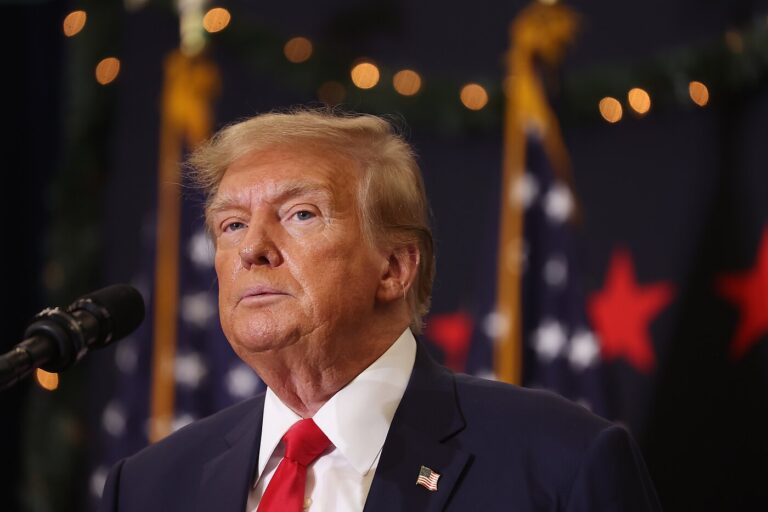
The language coming from Donald Trump is not diplomatic signalling. It is pre-war escalation. Public ultimatums, talk of “massive armadas”, and warnings that “time is running out” are not tools of negotiation. They are the final steps in manufacturing consent for force.

Europe has seen this movie before.

In 2003, allies were told that Iraq posed an urgent and intolerable threat. Military build-ups were framed as leverage for diplomacy. War was sold as a last resort. Once the first strikes landed, the logic of alliance loyalty took over, and European governments found themselves complicit in a conflict that reshaped global politics for a generation.

Iran is not Iraq. It is larger, more cohesive, and embedded across the Middle East through economic, political, and military networks. Any US strike, however “limited”, will trigger retaliation that cannot be geographically contained. Shipping lanes, energy infrastructure, regional capitals, and US bases will all become potential flashpoints. At that point, the war will no longer belong to Washington alone.

For NATO, the danger is structural. Even without a formal Article 5 invocation, European allies will be drawn in through basing agreements, intelligence sharing, air defence support, naval escorts, and logistical integration. These roles are always described as defensive. They never remain so. Once European forces are embedded, political autonomy collapses under the weight of alliance expectations.

This conflict, if it comes, will outlive any single presidency. Iran does not need to defeat the United States militarily. It only needs to prolong instability long enough to exhaust political will and fracture alliances. Europe will bear the economic and security consequences long after the original decision-makers have left office.

The economic risks alone should give pause. A war in the Gulf would send energy prices soaring, disrupt global trade, and deepen economic stress across Europe at a moment of already fragile growth. Inflation, supply chain shocks, and market volatility would hit European households immediately. The Global South would suffer even more severely, amplifying migration pressures and regional instability that Europe would then be expected to manage.

None of this is inevitable.

Iran has signalled willingness to engage in dialogue. Regional actors are desperate to avoid escalation. What is missing is not an off-ramp, but restraint. And restraint cannot come solely from Washington.

NATO governments must ask themselves a hard question. Is alliance loyalty compatible with strategic blindness? Or does loyalty sometimes require saying no, early and clearly, before momentum becomes destiny?

Europe’s security interests are not identical to those of the United States. They never have been. Treating them as interchangeable has repeatedly led Europe into wars that undermine its own stability, credibility, and economic resilience. That mistake cannot be repeated.

This is not a call to abandon alliances. It is a call to act like adults within them.

European governments should insist on diplomacy over coercion, de-escalation over spectacle, and collective restraint over unilateral action. They should make clear that NATO is a defensive alliance, not a blank cheque for wars of choice. Silence now will be read as consent later.

History will not be kind to those who claim they had no choice. There is still a choice. But the window is closing.

Europe must decide whether it will once again be dragged into a war it neither wants nor controls, or whether it will finally assert that alliance does not mean obedience.

The time for private unease has passed. This is the moment for public clarity.

What Zimbabwe Would Need to Fix Before BRICS Actually Mattered

Let us imagine a counterfactual Zimbabwe: a country that joins BRICS and actually benefits. Not in speeches, not in newspaper headlines, not as a diplomatic trophy, but in the lives of ordinary people. What would have to be true for that to happen?

Quite a lot.

Because BRICS cannot fix a country. At best, it can amplify what already works. For Zimbabwe, the hard truth is that too little currently works well enough to be amplified.

Predictable rules, not clever announcements

BRICS would only matter if Zimbabwe became a place where policy is stable and predictable. Investors and trading partners do not commit to economies where rules change overnight, where regulations are selectively applied, or where currency policy turns into emergency improvisation. Zimbabwe does not need more economic “plans”. It needs fewer surprises.

Credible institutions that are bigger than personalities

A country cannot bargain confidently in international blocs when its own institutions are distrusted at home. Zimbabwe would need a civil service that functions professionally, regulators that are not captured by patronage, and a judiciary that is seen as independent. BRICS partners may not lecture about governance, but they price it into every deal.

A productive economy that can actually trade

BRICS is not charity. It is trade, leverage and exchange. Zimbabwe would need to expand what it produces beyond raw exports and informal hustle. If you cannot manufacture competitively, process locally, and export value-added goods, membership simply turns you into a market for other people’s products.

To benefit from BRICS, Zimbabwe would need:

  • Revived industry and reliable electricity
  • Predictable access to foreign currency for inputs
  • Functioning logistics and rail, not only roads and border queues
  • An export strategy that goes beyond minerals and tobacco

Clean procurement and a war on tenderpreneurship

No bloc can help a country where big deals are structured for insiders. Zimbabwe would need to fix procurement, end opaque contracting, and stop treating state tenders as political rewards. Otherwise, BRICS-linked projects would simply become new feeding troughs, not development.

A currency system people trust

If Zimbabwe wants to ride BRICS discussions on de-dollarisation, it must first earn domestic credibility. That means a central bank that is transparent about reserves, disciplined about money creation and honest about the true state of liquidity.

A gold-backed currency only matters if the backing is verifiable, protected and not quietly mortgaged away.

Human capital retained, not exported

Zimbabwe’s biggest loss is not capital flight. It is people flight. Skills have left at scale, and those remaining are often stuck in survival economics rather than innovation. For BRICS to matter, Zimbabwe would need to rebuild a labour market that rewards skill, protects workers and creates upward mobility.

Otherwise, Zimbabwe will keep exporting nurses, teachers and engineers while importing finished goods.

Real accountability, not selective discipline

The final condition is the hardest. Zimbabwe would need accountability that applies to everyone, not only to those who fall out of favour. Without accountability, every advantage offered by BRICS becomes another opportunity for looting, and every “partnership” becomes another PR exercise.

So what would BRICS look like in a fixed Zimbabwe?

In a functional Zimbabwe, BRICS could matter in practical ways:

  • Access to development finance that actually builds productive capacity
  • Structured trade deals that increase exports, not just imports
  • Technology transfer tied to manufacturing and skills
  • Infrastructure projects delivered on time and maintained
  • Payment systems that reduce reliance on the dollar without collapsing confidence

But in the Zimbabwe we currently have, BRICS risks becoming what many other initiatives have become: diplomatic theatre layered on top of unresolved domestic dysfunction.

The counterfactual is not fantasy. It is a checklist.

Zimbabwe does not need BRICS first.
Zimbabwe needs to fix itself first.

Then, and only then, BRICS would stop being a badge and start being a tool.

Why Joining BRICS Will Not Fix Zimbabwe’s Problems

0

There is a growing narrative that Zimbabwe’s push to join BRICS represents a strategic economic pivot, driven in part by deteriorating relations with the West under Donald Trump’s hardline trade and visa policies. On paper, it sounds bold. In reality, it risks becoming another distraction from Zimbabwe’s real crisis.

Zimbabwe does not suffer from a lack of international partners. It suffers from poor governance.

The country already trades with China, South Africa, Russia, the UAE and others within or aligned to BRICS. Membership does not magically unlock markets that are currently closed. Zimbabwean goods are not failing to sell because of diplomatic exclusion. They are failing because of low productivity, weak competitiveness, inconsistent policy and chronic mismanagement.

BRICS is not an economic rescue package. It is a geopolitical club.

For countries with strong institutions, industrial capacity and export strength, BRICS offers leverage and optionality. For weak states, it offers symbolism and very little else. Zimbabwe risks mistaking alignment for advancement.

The argument that BRICS membership will attract foreign direct investment assumes investors are waiting for a badge rather than reforms. They are not. Investors look for predictable policy, enforceable contracts, independent courts and credible regulation. Zimbabwe currently struggles on all four fronts.

No multilateral bloc can compensate for that.

There is also a deeper danger rarely discussed. Zimbabwe’s integration into blocs like BRICS could further entrench its role as a passive consumer rather than an active producer. Without industrial revival, Zimbabwe risks becoming a dumping ground for cheap manufactured goods from better-managed economies within the bloc, while exporting raw materials at minimal value.

That is not development.
It is dependency with new branding.

The enthusiasm around de-dollarisation follows a similar pattern. Trading outside the US dollar sounds appealing politically, but currency sovereignty only works when supported by disciplined fiscal policy and public trust. Zimbabwe’s currency history is a catalogue of broken confidence, not because of sanctions or dollar dominance, but because of reckless domestic decisions.

The ZiG may be more stable than past experiments, but its long-term success will not be decided in Moscow, Beijing or Pretoria. It will be decided in Harare, by whether authorities resist the temptation to print, manipulate and interfere.

The fixation on BRICS also reflects a dangerous externalisation of blame. It implies Zimbabwe’s stagnation is primarily the result of Western hostility, rather than domestic failure. That narrative absolves those in power while changing nothing for ordinary citizens.

Zimbabwe’s most valuable resource is not gold, lithium or land.
It is its people.

And that resource has been systematically wasted through poor education outcomes, mass emigration, informalisation and political exclusion. No global bloc can fix that.

If Zimbabwe joined BRICS tomorrow, poverty would not disappear. Wages would not rise. Hospitals would not function better. Corruption would not evaporate. What would change is the rhetoric, not the reality.

True economic recovery will not come from choosing sides in global power struggles. It will come from boring, unglamorous work: rebuilding institutions, restoring trust, enforcing accountability and allowing talent to thrive.

Until that happens, BRICS membership will remain what it currently is for Zimbabwe:
a badge to brag about, with little benefit for the people who need change the most.

斯塔默的访华之行不是投降,而是一次现实检验

0

英国首相基尔·斯塔默即将访问中国,此举立刻引发了英国保守党的熟悉反应。他们毫不意外地将这次访问描述为“投降”,并称其对国家安全构成威胁。这种说法不仅懒惰,而且越来越脱离英国乃至世界所面临的现实。

我不是情报官员,但判断国际安全的主要威胁并不需要接触机密文件。对任何理性观察者来说,当今对国际稳定造成最大破坏的,并不是北京,而是唐纳德·特朗普。他公开蔑视盟友、国际法以及多边机构,其对全球秩序造成的破坏,远远超过任何一次与中国的外交接触。

斯塔默此行,标志着英国政府试图重塑对华关系的最重要时刻。财政大臣、副首相以及商务大臣此前都已访华,如今轮到首相亲自出面。这种顺序本身就释放了一个清晰信号:这是战略调整,而非软弱退让。

斯塔默毫不掩饰他对历届保守党政府的失望,他称这些政府在对华问题上的做法是“失职行为”。在其他西方主要经济体持续与北京保持接触的同时,英国却选择了自我孤立。加拿大总理去了,法国总统去了,而英国却逐渐成为同类国家中的“异类”。

这不是原则性的强硬,而是意识形态造成的瘫痪。

此次随行的英国代表团规模庞大,涵盖商业、工业和文化领域,包括巴克莱银行、捷豹路虎以及皇家莎士比亚剧团。这并非象征性的访问,而是一种明确表态:英国清楚二十一世纪的经济重心在哪里。

斯塔默的核心论点十分直接:中国是世界上最大的经济体之一,与中国建立稳定且具有战略性的关系,符合英国的国家利益。这并不意味着天真,而意味着清醒。

更重要的是,只有通过接触,敏感议题才有被提出的可能。人权问题并不会因为拒绝对话而得到改善。关闭沟通渠道只会满足国内的政治表演,却无法真正帮助任何人。持续而直接的外交,才是唯一现实的途径。

保守党的反驳主要集中在伦敦市中心批准建设新的中国大型使馆一事,并将其渲染为国家安全威胁。这种说法站不住脚。外交本质上就意味着存在。如果把设立使馆都视为“投降”,那伦敦恐怕要连夜关闭一半的外国使馆。

这种批评真正反映的,是一种过时的世界观:认为英国的安全和繁荣只能依附于所谓的“英美特殊关系”。这种假设正在迅速失效。一个公开质疑北约、对威权政治暧昧不清、并将盟友关系视为交易筹码的美国,已经不再是可靠的战略支柱。

如果英国执意快速走向无关紧要,它完全可以继续抱紧这种幻想。但如果它希望在世界上发挥作用,就必须承认世界已经改变。

重新建立对华关系,还能打开更广阔的大门。许多前英国殖民地,包括津巴布韦,近年来已明显“向东看”,在投资、基础设施和贸易方面加强与亚洲的联系。如果英国只把自己定位为西方体系的附属品,它的全球影响力只会进一步萎缩。与中国接触,反而能为英国重新进入这些地区创造直接或间接的通道。

这并不是在中国和美国之间“二选一”。这是拒绝被虚假的二元对立所困。成熟的国家会建立多重伙伴关系,会对冲风险,会根据自身利益调整战略,而不是把国家前途外包给一个自身方向正在动摇的盟友。

把这次访问称为“投降”,暴露的不是战略洞察力,而是想象力和领导力的匮乏。斯塔默的访华之行并非国家安全的威胁,它只是承认一个事实:在一个已经发生变化的世界里,英国无法再依赖意识形态怀旧来制定外交政策。

真正的危险,不是与中国接触,而是把孤立误认为力量,把忠诚误认为战略。

Starmer’s China Trip Is Not a Surrender. It Is a Reality Check

0

Sir Keir Starmer’s visit to China has triggered a familiar reaction from the Conservatives. Predictably, they have framed the trip as a surrender and a threat to national security. This language is not only lazy, it is increasingly detached from the realities facing Britain and the wider world.

I am not an intelligence officer. But it does not require access to classified briefings to see where the most immediate threat to international stability lies. It is not Beijing. It is Donald Trump, whose open contempt for allies, international law, and multilateral institutions has done more to undermine global security than any diplomatic visit to China ever could.

Starmer’s trip marks the most important moment yet in the government’s attempt to reset the UK’s relationship with China. The chancellor, the deputy prime minister, and the business secretary have already been. Now it is the prime minister’s turn. That sequencing matters. It signals intent, not weakness.

Starmer has been clear about his frustration with what he describes as a “dereliction of duty” by recent Conservative governments in effectively shutting Britain out of Beijing. While other comparable Western economies have maintained strategic engagement, the UK chose self imposed isolation. The Canadian prime minister has been. The French president has been. Britain, by contrast, became an outlier.

That was not principled realism. It was ideological paralysis.

Dozens of British organisations are represented on this visit, spanning corporate, industrial, and cultural life. They include Barclays, Jaguar Land Rover, and the Royal Shakespeare Company. This is not a symbolic delegation. It is a statement that Britain understands where economic gravity lies in the twenty first century.

Starmer’s core argument is straightforward. China is one of the world’s largest economic players. A strategic and consistent relationship with Beijing is therefore in Britain’s national interest. That does not require naivety. It requires coherence.

Crucially, engagement is also how difficult issues are raised. Human rights are not defended through silence or absence. They are defended through sustained, direct diplomacy. Shutting doors may satisfy domestic posturing, but it achieves nothing for those on the receiving end of abuses.

The Conservative counterargument centres on the recent approval of a new Chinese mega embassy in central London, which they cite as evidence of a security threat. This is thin gruel. Diplomacy by its nature involves presence. If embassies are treated as capitulation, then Britain should close half of London overnight.

What this criticism really reflects is an outdated worldview. One in which Britain’s security and prosperity are imagined as inseparable from the so called “special relationship” with the United States. That assumption is becoming increasingly untenable. An America that openly questions NATO, flirts with authoritarianism, and treats alliances as transactional is not a reliable foundation on which to build a future.

If Britain wants to fast remain irrelevant, it can cling to that illusion. Or it can recognise that the world has changed.

A renewed relationship with China also opens doors far beyond Beijing. Many former British colonies, including Zimbabwe, have increasingly looked east for investment, infrastructure, and trade. Britain positioning itself solely as a Western appendage limits its reach. Engaging China creates indirect and direct pathways back into regions the UK claims to care about but has largely abandoned.

This is not about choosing China over the United States. It is about refusing to be trapped by a false binary. Mature states pursue multiple partnerships. They hedge. They adapt. They act in their own interest rather than outsourcing it to allies whose priorities are drifting elsewhere.

Calling this “surrender” is a failure of imagination and leadership. Starmer’s visit is not a threat to national security. It is an acknowledgement that Britain cannot afford ideological nostalgia in a world that has already moved on.

The real danger is not engagement with China. It is mistaking isolation for strength, and loyalty for strategy.

Why Trump’s ‘White Farmer Refugees’ Narrative May Accidentally Help South Africa

0

A question South Africans are constantly asked, often by outsiders, is whether the country will ever “do a Zimbabwe” on land. The honest answer, from everything history has taught us, is no. Not because land reform is unnecessary, but because South Africa has seen exactly how quickly disorder invites sanctions, capital flight and economic collapse.

South Africa wants land reform. It knows it needs land reform. But it also knows that chaotic land seizures are a fast track to international isolation. That is why reform has been slow, legalistic and, to many, frustratingly incremental.

There is crime and lawlessness in rural South Africa, but it is not the racial cartoon presented by sections of the Trump media. Farm attacks affect both white and black farmers. Violence in rural areas is part of a broader crime crisis, not a racial extermination project. That nuance is deliberately erased because it does not serve the narrative.

The obsession is not with human life.
It is with white life.

And yet, buried inside this racially charged propaganda is an unintended consequence that may actually benefit South Africa.

By openly inviting white South African farmers to relocate to the United States of America, Donald Trump may have handed South Africa a pressure-release valve it never formally asked for.

If white farmers want to leave, why stop them?

From a purely strategic standpoint, voluntary exit is the cleanest form of land redistribution. No invasions. No violence. No court battles. No international backlash. Just transfer and transition.

What is rarely acknowledged is that many of the farmers leaving are not the large-scale, highly productive commercial giants that dominate media imagery. They are often smaller landholders, underutilising land, sitting on inherited property, or farming at marginal productivity levels. This was also true in Zimbabwe, though the myth persists that every white farmer was a paragon of efficiency and national importance.

Land ownership does not automatically equal productivity.

The media prefers simple heroes and villains, but reality is messier. In both Zimbabwe and South Africa, there have always been farmers sitting on land without meaningful output. That does not justify violence or theft, but it does complicate the moral story.

If South Africa were tactically clever, it would not panic about Trump’s refugee rhetoric. It would quietly let the door swing open.

Encourage voluntary sales.
Offer fair, transparent compensation.
Provide relocation support if necessary.
Let those who feel unwanted or unsafe leave with dignity.

That is not persecution. That is choice.

Land inequality in Africa is real. It is the direct result of colonial dispossession. The uncomfortable truth is that there is no perfect way to correct a historical injustice without upsetting someone in the present. The challenge is to reduce harm while restoring balance.

Violence is the worst option.
Denial is the laziest option.
Voluntary transition may be the least damaging option.

South Africa’s strength, unlike Zimbabwe’s at the time, is that it still has functioning institutions, access to capital and global legitimacy. It does not need to rush. It does not need to burn bridges. And it certainly does not need to perform land reform for Western approval.

If some farmers genuinely believe their future lies in America, let them go. The United States has land. It has subsidies. It has protections. What it does not have is cheap, exploitable labour and weak regulation, which may explain why only certain farmers are interested in leaving.

The real question is not whether land reform can be fair.
It is whether it can be honest.

And honesty begins by admitting that land ownership, productivity, race and justice are far more complex than the slogans sold by foreign politicians with no stake in Africa’s future.

History has already shown South Africa what not to do.

The challenge now is figuring out what to do without pretending the problem does not exist.