The COVID-19 pandemic has provoked the already high levels of common mental health disorders in Zimbabwe to an alarming level. Depression, anxiety, post-traumatic stress disorders, substance use disorders, and suicides are likely to increase. We already know that 1 in 4 Zimbabweans present with some symptoms of depression at any given time and globally that every 40 seconds someone takes their own life by suicide (WHO). We can only imagine what these figures look like in the coming months against the background of COVID-19. With the absence of social safety nets, poverty, food insecurity, loss of jobs and general uncertainty about the future, Zimbabweans are facing an epidemic within the pandemic.
Lockdown measures have resulted in a loss of income for people in the informal sector (and some in the formal sector) who were previously managing to live hand to mouth. School closure has meant loss of routine and stability for the young. Zimbabwe’s youth, defined as total population under the age of 35 by UNFPA is approximately 67.7% of the total population. Stay at home measures, especially in high density suburbs, has led to increased reports of intimate partner violence and domestic abuse.
Access to mental healthcare is suboptimal at the best of times. In light of the corona virus pandemic access to evidence-based care has become near non-existent.
To bridge the mental health treatment gap, the Friendship Bench is exploring the use of a digital mental health intervention. The intervention is currently in its trial phase as we gather the evidence needed for scale-up; our interventions are grounded in evidence-based. The intervention is delivered via a chat-based app that can be downloaded on Google Play or accessed via a web browser for desktop and iOS users. Once a client has registered, they select the Friendship Bench counsellor they would like to talk with, based on gender, star rating, language spoken, and time slot availability.
The team who deliver the intervention have been trained by a group Friendship Bench clinicians in basic Cognitive Behavioural Therapy with an emphasis on Problem Solving Therapy and activity scheduling. Each session lasts up to 90 minutes and follows a 3-step approach. Firstly, identifying and defining the problem; secondly, problem exploration and brainstorming around one specific issue that is feasible to address; and lastly, developing a SMART action plan to go and try. Once the session is done, a client can book for a follow-up session where the Friendship Bench coach can review with the client how it went, if there were barriers or if there is another problem they can start working on together.
Should someone not want to or be unable to download the app we also offer them the same intervention over WhatsApp, this means the person can then choose between a voice call or message session and the Friendship Bench peer counsellor will call them for the session to ensure there are no airtime or data issues.
All our sessions are free of charge as well as confidential, and clients can choose to remain anonymous.
Guided by our values of empathy and connection, anchored in research, the Friendship Bench mission is to create safe spaces and a sense of belonging in communities to enhance people’s mental wellbeing and improve quality of life.
Pretoria, South Africa – The United States (US), has pledged to support South Africa in the fight against the COVID-19 pandemic.
Although the US is hurled in its own COVID-19 storm, the world’s economic powerhouse has once again shown its undying support for South Africa by ensuring that the southern African country has personal that are well equipped to fight the COVID-19 pandemic.
“USAID will train up to 10 000 critical care nurses and physicians to ensure safe and effective utilization of donated ventilators through online modules.
USAID will also support supply chain assistance for oxygen therapy and has procured 25 high flow nasal cannula oxygen units for the Western Cape Provincial Department of Health, another important emerging intervention for patients with respiratory failure.
Through an All-of-America approach, the United States is providing life saving support by coordinating with the government of South Africa and other stakeholders to identify priority areas for investment.
The total U.S. government financial commitment to South Africa’s COVID-19 response is over US$41.6 million (R767 million),” read a statement from the US Embassy and its consulates in South Africa.
South Africa now has more than 215 000 COVID-19 cases. It’s also the country with the most number of COVID-19 cases on the continent.
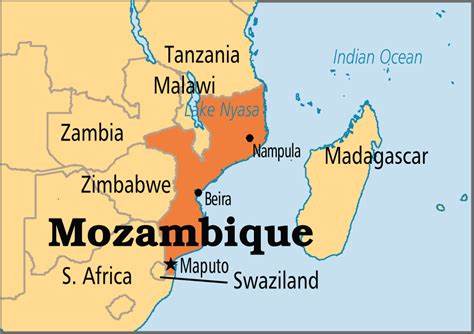
Bezaruto, Mozambique – Following massive outcries from the public and environmentalists, South African petrochemicals giant Sasol, has opted to give up its licence to explore for gas in Bezaruto.
Last week, the Marine Megafauna Foundation said the Vilanculos and Inhassoro communities were overwhelmingly opposed to the project due to the high likelihood of negatively affecting marine tourism and fishing.
“The Bazaruto Seascape is home to the last viable population of dugongs on the African continent.
In addition to the dugong, several species of dolphin live in the region, including the endangered humpback dolphin. Seasonally, larger cetaceans, like the humpback whale, use this coastline to give birth and find mates. This project would have placed incalculable stress on these highly sensitive species.
Of particular concern was the proximity of the project to the last remaining viable population of dugong in Africa, which stands at only a few hundred strong. The International Union for the Conservation of Nature (IUCN) just declared this area an important marine mammal area (IMMA).
Concerns were also voiced about Sasol’s ability to adequately deal with the waste pollution generated from this type of project, as well as the short and long term impacts the various stages of the project could have on the local marine ecosystem and the potential eyesore it would cause.
Moreover, local communities in this region are critically dependent on coastal resources for subsistence and for their livelihoods,” said the Marine Megafauna Foundation in a statement.
Durban, South Africa – More than 1 000 truckdrivers mainly in Johannesburg and Durban have embarked on a strike demanding to be put first.
The South African truckdrivers who are currently embattled in the strike are demanding truck companies to stop hiring non South Africans.
Although the Pretoria High court ordered an interdict on the strike on Monday, the truckdrivers are seemingly not concerned.
“The strike is illegal, they are saying foreigners don’t have proper documentation, as far as I am concerned no one is allowed to drive without proper documentation, companies know that because they know if they do that they won’t be compensated in the event that there is an accident,” said Mary Phadi, president of the Truckers Association of South Africa (TASA).
Gavin Kelly spokesperson of the Road Freight Association also said the strike was highly uncalled for.
“According to the department of labour, 10 percent of employees are foreigners not 90 percent. These stats are with the department of labour and a survey on that was completed last year. If you find truck employers who are breaching labour laws then they should face the full might of the law.
Kelly also acknowledged that South Africans should be prioritised first when it comes to employment but disagreed with the issue of having a quota system.
“When it comes to employment South Africans should be given first preference but I don’t think a quota system is the right way to go,” said Kelly.
Sam Morotoba, Deputy Director General of Public Employment Services in the Department of Labour said the issue of not hiring non South Africans was not feasible.
“We can’t just say no more hiring foreigners, we have to understand that we have people on asylum, refugees and those with special permits who are qualified to be employed, besides there are SADC agreements that we have in place,” said Marotoba.
Chairperson of the African Diaspora Forum, Dr. Vusumuzi Sibanda said there was nothing wrong with truck companies employing non South Africans.
“Companies employ on merit and they do tests and the foreign drivers are employed because they do well on these superlinks and triaxle trucks as well as defensive driving. This strike is malicious and fuelled by cheap politicking,” said Dr. Sibanda.
Since most of the non South African truckdrivers are Zimbabwean, the Zimbabwe Congress of Trade Unions (ZCTU) also weighed in on the issue.
“SA is part of SADC and should not segregate SADC nationals. There is nothing new with transborder truckers being nationals of various countries because of the nature of their work.
Such behavior being demonstrated by South African truck drivers brews xenophobia,” said Japhet Moyo, secretary general of ZCTU.
Dear people of Zimbabwe and anyone from elsewhere who managed to read the story of my dismissal that was published by Newsday and later distributed to every media house in Zimbabwe! I am here to set the record straight. My name is Sifelani Makaita Gomo.
I am writing this post to set the record straight about my departure from OK Zimbabwe.
I was not dismissed for gross incompetence as reported recently. I was dismissed for Any act, conduct or omission, inconsistent with the express or implied conditions of employment of so serious a nature as to constitute a breach of the contract of employment going to its roots. And by doing what I am doing, let it be known that I am not challenging my dismissal. I did that 15 years ago and I won the case at the Labour court because judge president Mtshiya who presided over my case did the work of a judge like King Solomon in the Bible. The designated officer dismally failed to prove the act, conduct or omission on my part but they dismissed me anyway. Their lawyer, Mugandiwa was even worse. He looked for a definition of this miscellaneous offence in dictionaries and books of law and admitted on his own that the definitions he found could not help so he decided to base his arguments using minutes of a hearing that was nullified by the first appeals committee at OK Zimbabwe. That hearing was his only resource and judge President Mtshiya was too smart, he refused to be side-tracked. He refused to honour Mugandiwa’s submissions that were based on a nullified hearing.
I invite you all to read the Labour court judgement and to compare with the judgement delivered by a supreme court.
The good judgement was overturned by the supreme court of Zimbabwe in 2009. When I read the supreme court judgement my heart bled, not because I had lost the case, no! The supreme court found me guilty of not only the one unproven miscellaneous offence I was charged with. The court ‘conferred’ on me an extra offence under the same serious offences 1.2.10 which is gross incompetence in work performance. This is a first in the history of Law in the whole wide world, that a superior court manufactures its own charges and imposes them on the respondent. And l think, the only reason they did that was because there is no recourse after the supreme court. It is no coincidence therefore, that my story is trending on the internet and the only reason that excites the reporters who reported my story is the one offence that was imposed by the supreme court. At no one time have l read a reporter quoting the real charge l was dismissed for.
The quality of the judgement on its own leaves a lot to be desired. There are gross errors of commission and omission and outright lies. In my first quarter appraisal I missed the sales target for the first quarter by 4% and surpassed profit target by 239%. I gave my staff a special lunch to thank them for the sterling performance. Three months later my then area manager, I believe in obedience to an instruction from his superior sent me a warning in the mail bag for the same performance I had celebrated with my staff. I raised it in my hearing and the disciplinary committee even commended me for the performance though they did not use it in mitigation. I found it shocking that the supreme court used the warning for such a sterling performance as an aggravating circumstance to overturn a good judgement. It baffled me further to imagine that if the judges went to such great lengths to look for aggravating factors that were actually not aggravating, how did they fail to read my detailed response to the leave to appeal? There was no iota of evidence that they even looked at any of my submissions or the labour court judgement they overturned? How did they produce two offences when the judgement they overturned had only one?
A dismissal is not supposed to be that fatal but mine was. I will explain how using the following aside.
Sifelani Makaita Gomo prophecy by Prophet TB Joshua
In 2011 I went to SCOAN just for my own retreat and I received a prophecy from Prophet TB Joshua concerning the court case that had already been concluded as if it were still going on. He said, “they are planning to turn everything upside down for you”. I wondered how else because they had already done that, and the fraudulent judgement was testimony enough. No, they were not done. In 2014 a news item suddenly appeared on allafrica.com. It was only one paragraph and it needed a subscription to access the whole story. It was headlined ” OK Zimbabwe given green light to fire incompetent manager”. Notice that the report is dated October 2009, but it never appeared on the internet till 2014. The one paragraph I refer to has my name on it and it said I was dismissed for gross incompetence, an offence that was not even on my charge sheet.
I immediately wrote to allafrica.com asking them to remove the article because it was not true. They removed immediately and apologized. The same day at 8.58pm, a blogger I do not know till now posted the full article on his blog. The language of the anonymous reporter was venomous and the only truth in the article was that I was dismissed from employment. I was never suspended as the reporter alleged.
It was after several months that I found the email address of the blogger and I emailed him requesting that he remove the damning article from his blog. To my surprise he was adamant, citing The Herald as the source. I immediately knew that someone was on payroll just to tarnish my image. This is when it dawned on me that prophet TB Joshua’s prophecy had come to pass.
I started writing to different people whom I thought were able to help me, but it was all in vain. They said supreme court judgements are final. Really? Must a fraudulent judgement be final?
I never stopped looking for help because my adversaries had proven beyond reasonable doubt that when they dismissed me from employment they had a well-orchestrated plan to destroy my career by tarnishing my image to the world that has not met me. It is not a coincidence that the one charge that was not on my charge sheet is the one that has been grabbed by unscrupulous news reporters and made a news item, further tarnishing my image. And it baffles my mind that some people earn a living from the pain of others.
Why is it that the correct offence I was charged with is not even mentioned by the two reporters who reported my case?
Yes, they have told me that the supreme court judgements cannot be contested and that there is no recourse after the supreme court. What about in cases like mine where the judgement was done fraudulently? Reading the Labour court judgement alone is enough for one to see the anomaly.
When the new Zimbabwe was born, I was so encouraged when president Mnangagwa promised to deal with corruption in every ministry. He said that cases that were unfairly handled and where corruption could be proven can be revisited. I had already been from pillar to post in quest for justice, but his promise gave me a fresh energy and an assurance that one day justice will be served.
When I approached the Law Society of Zimbabwe, I had this in mind. I wanted my case to be audited. I never approached them to challenge any dismissal because I did that 15 years ago and I was robbed by the supreme court. LSZ told me that they had no authority to audit the supreme court but asked me to file a complaint against the lawyer who handled my case if I had any and I did. The bad reporter says I accused the Mugandiwa of ‘bias’. What bias? Where did I say that?
It is very disheartening to find my name trending on the internet over lies that I was trying to expose when I approached Wisdom Mudzungairi three months ago to publish a story that would set the record straight. I sent him all the documents that support my story, from the Labour court judgement, my dismissal letter, minutes of the hearing, my letter of appeal and even my performance appraisals. It is clear on all the documents that I submitted that I was dismissed for a miscellaneous offence 1.2.1 (Any act, conduct or omission inconsistent with the fulfilment of the express or implied conditions of employment of so serious a nature as to constitute a breach of the contract of employment going to its root) and not gross incompetence. For three months he was dragging his feet, pretending to be busy then he suddenly leapt on my story when a supposed “link” was sent from The Law Society of Zimbabwe. The reporter was quoting out of context and he never bothered to verify with me for a balanced report. What kind of journalism is this? I thought we were together in trying to see to it that the integrity of our justice system is maintained by exposing corruption that saw me being convicted for a different set of offences when I had run to the courts with one offence on my charge sheet. What kind of desperation for a story is this, for a whole editor to set aside the main issue brought before him and start chasing some side shows created by people that are only referred to as sources familiar with the issue. This so-called source has been the enemy behind the scenes in my case. And we both know the source. It is my suspicion that the reporter was held “at money point” by his so-called source so my opinion did not matter. Forgive me for suspecting.
The president recently granted amnesty to prisoners who were serving sentences over crimes that they knew had committed. Must I spend my life in a virtual prison because of a deliberate error from the supreme court that used its finality clause to impose a wrong sentence on an innocent person? Must someone be allowed to sit on my neck for so long in the name of ‘a supreme court judgement can’t be reversed?’ It is this finality clause that my adversaries exploited, and they now use a judgement they manipulated to defame me. I can’t breathe, and I have not been able to breathe for 15 years. Are supreme court judges so above the law that they can get away with justice perversion of this magnitude?
I am including my heads of arguments that I pulled out from my file. The reporter from Newsday faulted me for not raising it with the court that the pages were scrambled. While this was not my major concern, let me tell the reporter that I did. The clerk at the supreme court even permitted me to correct the pages I was quoting on my heads of arguments in all three files weeks before the hearing. You will see that I went through the files cancelling the initial page I had previously quoted and writing the correct page using a pen. You will also notice that in some instances there is a difference of more than 100 pages between the original page l quoted and the new pages. For example, the trading report that was on page 27 in the original file is found on page 114 in the new file.
There were new documents that were added to the file and file ballooned from less than 100 pages to 198. This I know because there are surprise submissions that Mugandiwa was quoting from the minutes of the nullified hearing. The original minutes were initialled on every page by me. The minutes in the file do not have my initials at all.
I believe my heads of arguments will set the record straight. On the JSC website I read that their vision is to have world class justice system. I have a right to enjoy that too. I can’t serve a life sentence in the name of “supreme court judgement can’t be reversed” while my adversary is celebrating and using the same to defame me. Why are the reporters all choosing to write about gross incompetence and ignoring the Any act, conduct or omission offence completely? Someone must audit the auditor. Supreme court can’t be a death trap.
Harare, Zimbabwe – The Zimbabwe Football Association (ZIFA) has conveyed its support towards women’s football in the country.
Last week, the Confederation of African Football (CAF) announced its intention of inaugurating a women’s championship league in 2021 which ZIFA has welcomed.
“It’s an excellent opportunity and a great testament that CAF is committed to the empowerment and development of women through football. Such a competition will strengthen women’s football leagues in Africa and ensure that women football becomes professional.
However, Zimbabwe has always been participating in such CAF tournaments and we welcome CAF’s wonderful idea which will without doubt empower our women footballers.
Furthermore, we already have a women’s soccer league and we are convinced that this will further cement professionalism in women football,” said Xolisani Gwesela, ZIFA spokesperson.
Highlanders chairperson, Kenneth Mhlophe, also welcomed the women’s championship league citing that it will help further strengthen women’s football in the country and the continent at large.
“The women’s championship league is a blessing in disguise, we do not have a league running hence, it was going to be difficult to assemble a strong team representing the country’s talent.
Henceforth, it is the right time to have a professional women’s league in the country.
Moreso, the US$500 000 grant from FIFA for women should be an incentive to run a professional league,” said the Highlanders chairperson.
Victoria, Seychelles – From the 1st of August 2020, Seychelles will reopen its ports of entry following months of closure due to COVID-19.
However, although visitors will now be allowed into the country, certain guidelines have to be strictly adhered to.
“Visitors coming from low risk countries must have a negative COVID-19 PCR certificate from an authorized laboratory dating no more than 72 hours from the date of travel. In the event that a PCR test is not available, a Rapid Antigen test will be required, whereas for visitors coming from medium risk countries, they will require a negative PCR certificate no more than 72 hours from the date of travel. Visitors coming from high-risk countries will not be authorized to enter Seychelles.
All negative test result certificates including all flights and accommodation details must be sent to the Public Health Authority to visitor@health.gov.sc, if visitors fail to submit their tests results, flights and accommodation details they will be subjected to a COVID-19 PCR or a Rapid Antigen test upon arrival.
Upon check in, all travelers coming to Seychelles must submit the approved test results to their respective airline companies for verification. Visitors must comply with all airline protocols upon embarkation.
Visitors must ensure that accommodation bookings are made only at licensed accommodation establishments or liveaboards that have been certified by the Public Health Authority. All booking vouchers reflecting the entire duration of their stay in Seychelles must be presented at the immigration counter for verification. If upon arrival visitors have not booked in a licensed and certified accommodation establishment, they will be directed to another establishment that has been certified.
Moreso, visitors must ensure that they have a valid travel insurance with full medical coverage for the duration of their entire stay in Seychelles.
Local service provides will be required to keep a trackable movement log of their guests for the first 14 days after arrival of a holiday in Seychelles,” read part of the statement from the Seychelles government.
Seychelles is amongst the very few countries in the world that have less than 100 COVID-19 cases.
To date, the southern African country which has a population of less than 100 000 has recorded 81 COVID-19 cases and no COVID-19 fatalities.
Thousands of students in colleges, universities and form fives yesterday went back to school.
Following the inception of the COVID-19 pandemic in the country three months ago, schools had to be closed to avoid a sharp increase in the number of COVID-19 cases.
However, the country’s Prime Minister Ambrose Mandvulo Dlamini said the reopening of schools and some sectors of businesses was not a reason to be complacent.
“The Ministry of Health’s Epidemiologist Nhlanhla Nhlabatsi has indicated that by the end of this month, our confirmed COVID-19 cases could reach 3 321 if people don’t adhere to the precautions of wearing masks, washing of hands with soap and water or sanitise frequently and keeping the social distance.
These projections are not meant to scare people, but a warning that if we don’t change our behavior the numbers that we see could triple and therefore flood our health system, resulting in more demand for ventilators, beds and frontline workers, which may prove to be impossible,” said Dlamini.
To date, eSwatini has recorded over 900 COVID-19 cases and 13 deaths. eSwatini is amongst a handful of countries in Africa that have reopened their schools.
Kinshasa, RDC – Les réglementations actuelles de verrouillage de COVID-19 au Rwanda causent beaucoup de problèmes à de nombreuses personnes en République démocratique du Congo (RDC).
De nombreux résidents de la RDC dépendent des importations de nourriture de l’Ouganda et du Rwanda, mais en raison des réglementations plus strictes de verrouillage COVID-19 imposées par le gouvernement rwandais, il est maintenant difficile pour les camions de nourriture de se déplacer de l’Ouganda et du Rwanda en RDC.
Il y a également eu une autre augmentation exponentielle des prix des marchandises en raison de facteurs logistiques.
La RDC dépense plus de 1,5 milliard de dollars américains en importations alimentaires, mais selon l’Agence nationale pour la promotion des investissements, les sols fertiles abondants du pays, le climat tropical entre autres devraient lui permettre de nourrir deux milliards de personnes grâce à l’agriculture intensive.
“Pourquoi un pays comme la RDC devrait-il être troublé par l’importation de nourriture alors qu’il a les ressources nécessaires pour bien nourrir sa population à bas prix”, a déclaré Alain Kikandi Kiuma, doyen de la faculté d’économie et de gestion de l’Université de Goma.
D’autres pandémies comme Ebola et la rougeole ont freiné les progrès en matière de stabilité économique, les insurrections aggravant également la situation
Kinshasa, DRC – The current COVID-19 lockdown regulations in Rwanda are causing a lot of mayhems for many in the Democratic Republic of Congo (DRC).
Many residents in DRC rely on food imports from Uganda and Rwanda, but due to stricter COVID-19 lockdown regulations imposed by the Rwandan government it’s now difficult for food trucks to move from Uganda and Rwanda into DRC.
There has also been another exponential increase in the prices of goods due to the logistical factors.
DRC spends more than US$1.5 billion on food imports yet according to the National Agency for the Promotion of Investments, the country’s abundant fertile soil, tropical climate amongst others should allow it to feed two billion people through intensive farming.
“Why should a country like DRC be troubled by the import of food while it has the resources to feed its population well at low prices,” said Alain Kikandi Kiuma, Dean of the University of Goma’s Faculty of Economics and Management.
Other pandemics such as Ebola and measles have dampened progress when it comes to economic stability with insurgencies also worsening the situation.