Home Blog Page 11

South Africa schools in a tug of war

0

Staff Reporter – The Zimbabwe Daily

Pretoria, South Africa – Contentions are mounting in South Africa’s Education sector on whether schools should remain open or not.

Last month, after a lot of intense consultative meetings with various stakeholders the Basic Education Minister, Angie Motshekga reopened schools for grade 7 and grade 12 learners.

However, barely a month later after the reopening of schools scores of pupils and teachers have tested positive for COVID-19 with some succumbing to the virus which has now resulted in many teachers’ unions calling for the immediate suspension of all schools.

“We are now amongst the top 6 countries with the highest COVID-19 cases in the world, let’s close schools until the peak has ended,” said the National Teachers Union (NATU).

However, Noncedo Madubedube the General Secretary of Equal Education said closing all schools was not in the best interest of the learners.

“There are 9 million children who rely on the school nutrition program and for most of them that’s the only meal they receive.

Moreso, we did our own survey which showed us that 80 percent of learners want schools to remain open, we can’t have learners sitting idle at home.

However, it’s up to the communities on whether their schools should remain open or not,” said Madubedube.

Education expert, Professor Mary Metcalfe also castigated the move of closing all schools.

“We can’t suspend all schooling for the next 18 months. School governing bodies should work with communities in assessing the readiness of schools,” said Professor Mary Metcalfe.

The Basic Education Minister is expected to issue a verdict on the schooling issue after conducting cabinet deliberations anytime from today.

South Africa’s media sheds more jobs

0

Staff Reporter – The Zimbabwe

Johannesburg, South Africa – The impacts of COVID-19 are seemingly causing mayhems in South Africa’s media fraternity.

Top media entities such as Caxton, Media24, and SABC have either retrenched their staff or made salary cuts.

Hundreds of journalists have been left without an income which has prompted the South Africa National Editors Forum (SANEF) to issue out R5 000 grants to those in need.

However, with the rate the retrenchments are being issued many are likely not to receive the grant unless more funds are unveiled to towards the initiative.

Yesterday, Primedia became the latest entity to issue out a Section 189 (retrenchment notices) to its employees.

The media entity is home to radio stations such as 702, KFM, 947 and CapeTalk amongst other forms of media.

Although Primedia is yet to confirm the number of those affected, the Section 189 announcement has already been made.

“This decision follows an extensive strategic review process which scrutinised every facet of the business. Various factors, including new entrants in the media sector, have placed significant pressure on media businesses to adapt and evolve, in order to stay relevant.

Moreso, this has been further compounded by the Covid-19 pandemic, and South Africa’s national lockdown on our key clients and industries.

Important consideration has been applied to a number of initiatives to reduce the impact of job losses across the group. However, it has become abundantly clear that Primedia cannot successfully pursue the necessary strategic imperatives and ensure sustainability in the long term in its current modality,” said Primedia’s Interim CEO, Phumzile Langeni.

South African Airways’ US$600 million question

0

Staff Reporter – The Zimbabwe Daily

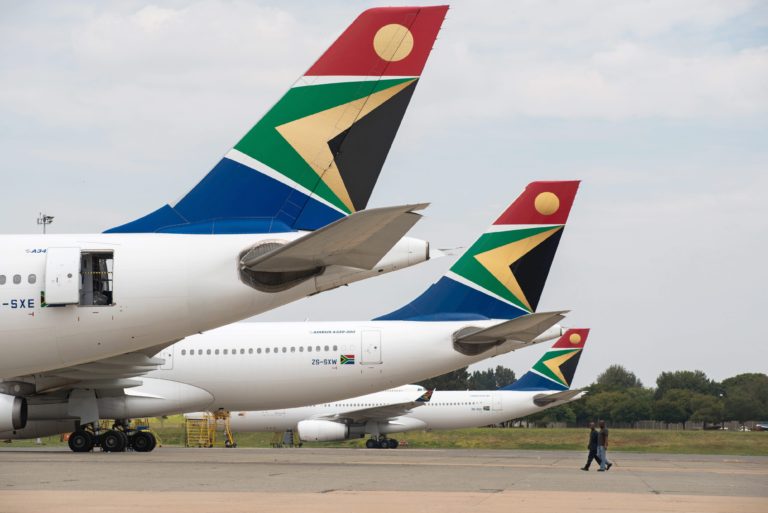
Ekhurhuleni, South Africa – South Africa’s embattled state owned airline, South African Airways (SAA) is expected to get a cash injection of US$600 million in the coming months.

SAA is in a huge financial stress which has since prompted the intervention of a Business Rescue Plan (BRP) which was initiated a few months ago to keep it afloat.

To date, the BRP will result in the restructuring of SAA which will see 2 700 employees losing their jobs.

It is projected that US$600 million will be required to fund the BRP, clean up and stabilise the balance sheet of SAA, restructure the rest of the group’s entities that are not in business rescue, provide working capital for the rest of the group’s entities, and to create a stable and viable platform for a new restructured national airline. 

Although details are still sketchy on where the US$600 million will come from, the Department of Public Enterprise said it welcomed the recommendations of the BRP.

“The Department of Public Enterprise welcomes the attraction of amix of local and international investor groups to provide the new airline with technical, financial, and operational expertise to ensure significant South African ownership whilst diversifying the investor base.

In terms of the business rescue plan that was published by the Business Rescue Practitioners for SAA, government, as the sole shareholder of SAA, is required to provide a letter of support for funding the plan where it results in a viable and sustainable national flag carrier that provides international, regional and domestic services,” read part of the statement issued out by the Department of Public Enterprise.

Mixed feelings over July 31 protests

0

Staff Reporter – The Zimbabwe Daily

Harare, Zimbabwe – Various stakeholders both in the political and civil realm have depicted mixed feelings towards the much anticipated July 31st nationwide protests.

The end of month protests have not yet been given the green light by the police but preparations are already at an advanced stage. The protests which are embodied under the Poverty Liberation Movement (PLM) are expected to yield in the resignation of the country’s President, Emmerson Mnangagwa and the removal of the ruling ZANU-PF political party.

However, Linda Masarira of the opposition LEAD political party is urging citizens not to embark on the PLM wagon come July 31st.

“Our stance on the 31 July protests as a party is that we are guided by the LEAD ideology and as such we believe in doing things that yield positive results and transform livelihoods. The nation is facing increasing Coronavirus cases and it is not wise for the people to take to the streets in protest.

It is one thing taking people into the streets, exposing people to COVID-19 and possibly arrests without achieving the main agenda of making transformative impact in regard to dealing with the corruption issue.

However, demonstrating is a Constitutional right enshrined in the Constitution of Zimbabwe. It is unfortunate that the past demonstrations that have happened in Zimbabwe were bloody, violent and characterized with looting, destruction of property and police brutality. Considering the political volatility in Zimbabwe, it is not a wise idea to get people in the streets as different disgruntled political camps might use the very noble idea of protesting against corruption to achieve their own personal hidden agenda to try and settle political scores nevertheless, I am not endorsing the marching on the streets,” said Masarira.

Moreso, ZimFirst leader, Dr. Maxwell Shumba Rusike said citizens should not just be roped into demonstrations that don’t have a clear endgame.

“What is the endgame of the planned demonstration?  What are the practical deliverables of the said demonstration?  Empirical evidence has shown that demonstrations in Zimbabwe have been used by some civic society and dubious political characters to nudge fatigued donors towards parting with a few US$s.

ZimFirst is unapologetically against using citizens and their plight to line pockets of a few enterprising political charlatans and villains without any meaningful and material political change. The collateral damage associated with these ill thought out political adventurism gimmicks is just astronomical most of the time.

Citizens were roped in the 2017 protests to push old Mugabe out without a clear picture of the endgame. People were used to sanitise a coup that has landed us in this situation where the military captured hapless and hopeless Mnangagwa has now resorted to shameless looting as his sole function in state affairs.

I call upon all progressive forces to be clear on what is to be achieved,  how it is to be achieved and work out practical modalities on confronting ZANU-PF before exposing citizens to state brutality and hazards of Covid 19. Citizens should not just be asked to demonstrate for the sake of demonstrating but to achieve clear goals. What are their goals?  That is where we stand and can do no other,” said the ZimFirst leader.

However Japhet Moyo, secretary general of the Zimbabwe Congress of Trade Unions said the ability to demonstrate was enshrined in the country’s Constitution.

“Section 57 and 58 of the Constitution of Zimbabwe are very explicit on the rights of citizens. The Constitution is supreme law and we should observe it.

All Zimbabweans including those in the essential service have every right to demonstrate and petition,” said Moyo.

South Africa’s low inflation, more harm than good

0

Staff Reporter – The Zimbabwe Daily

Pretoria, South Africa – South Africa’s consumer inflation rate is now at 2.2 percent its lowest since September 2004.

Although this might be good news, a lot of South Africans are bearing the brunt of COVID-19 which has adversely affected their livelihoods regardless of the low consumer inflation rate.

“Prices of basic goods have relatively increased which has caused some financial pressure on many homes, this is despite the fact that the consumer inflation index is at its lowest in 16 years.

Many families are struggling to put food on their tables as they are now jobless, and jobs are not easy to come by especially during this time of COVID-19.

Right now some of Truworths’ customers are owing the clothing retailer R5.5 billion in clothing accounts and most of them have already signalled that they won’t be able to settle their debts,” said Ray Mahlaka, Managing Editor of Mergers and Acquisitions Africa.

Dr. Nic Spaull, a Senior Research Fellow at the Research on Socioeconomic Policy (RESEP) group said the current socioeconomic status of the country was worrisome.

“To date, at least 3 million people have lost their jobs and that is from February this year and the number is going to increase.

Moreso, of the 3 million people that lost their jobs, two million were women with a lot of them earning less than R3 000, there is a lot of social inequality in this country, some will have to sell their assets for them to buy food,” said Dr. Spaull.

Hunger knocking on South Africa’s doors

0

Staff Reporter – The Zimbabwe Daily

Johannesburg, South Africa – According to Mthandazo Ndlovu, Oxfam South Africa’s Democracy and Governance Manager many South Africans are likely to go hungry during this COVID-19 pandemic.

Ndlovu has attributed this to loss of income due to massive retrenchments and closure of businesses.

“COVID-19 has caused inequality retrenchments which have created unemployment drought hotspots for hunger.

Just under 50 percent of all South Africans are living below the Poverty Datum Line (PDL).

The government has to maximize the COVID-19 social relief fund to avoid devastating results.

Moreover, there must be a fairer way of distributing food and regulating food prices as well as a basic income grant,” said Ndlovu.

Although South Africa is expecting a bumper food harvest this year, the repercussions of COVID-19 are likely going to see many people failing to procure basic food stuffs due to lack of income.

Corona virus hits Zimbabwean golfers hard

Staff Reporter – The Zimbabwe Daily

Harare, Zimbabwe – The COVID-19 pandemic has caused tremendous effects towards the country’s golfing fraternity.

Local and international  tournaments have either been cancelled or postponed which has left many golfers without an income.

“COVID-19 has disrupted the sport in a huge way. Firstly, there was no golfing activity for almost 2 months which left the golf clubs without any significant revenue in that period yet the costs of maintaining the golf courses remained the same.

Furthermore, professionals who earn their money from coaching where also severely affected. All the tournaments have been indefinitely postponed amongst them the prestigious Zimbabwe Open which usually attracts a lot of foreign players into the country.

However, the government and other  stakeholders have been very supportive during this pandemic, what is important to understand and appreciate is that this is a unique situation which nobody anticipated and in the whole process some mistakes will be made.

I believe we are all working towards one goal which is to ensure that the sport can be played with minimal risk to participants and support staff. The process might be viewed as taking long by others but eventually things will return to some form of normalcy when it is safe to do so.

On the issue of resuming the sport, currently the safety and health of everyone is the number one priority, that being said, golf is one of the safer sports that can be played in this pandemic as it allows for social distancing. Currently it has been classified as low risk and has been allowed to resume for training purposes only.

However, the association will be guided by the government and medical experts on the next steps forward,” said Mufaro Chivonivoni, president of the Zimbabwe Golf Association.

Why Education Helps Advance Your Career

0

Why Education Helps Advance Your Career

You may be on the fence about whether to pursue further education, however a degree is a major step in life that could open doors. During a higher-level education course, you’ll gain the skills, expertise and experience needed to succeed both professionally and in your personal life.

According to a study, gaining a degree will also help you feel much more confident in your future job roles due to the knowledge and skillset you have picked up along the way. In this guide, we’re going to look at just a few of the reasons as to why education may be able to advance your career.

1. Gain knowledge

Those who are about to start on their first-ever career path are doing so for one vital reason – to gain more knowledge in their desired career. Being aware of how an industry works and keeping up to date with the latest trends throughout your course will allow you to become an impressive candidate in the job market.

Within your degree, you may also be required to take on practical experience which will also set you apart when it comes to applying for future jobs. Having a vast amount of experience and valuable skills under your belt is sure to serve you well, regardless of the industry you plan on working in. When applying for sporting scholarships from asmscholarships.com, for example, you’ll be combining both practical and theoretical knowledge to understand the key requirements of a professional sportsperson.

2. A good work ethic

No college degree comes easily. It takes hours and hours and a great deal of determination to get a qualification, in which you will likely have had to make sacrifices to complete the course throughout the duration. Adding a higher-level education qualification to your resume is something that all employers are looking for as it proves that the candidates have a good work ethic. They should be willing to focus, expand their knowledge and work independently which are all valuable qualities for any company.

3. Boost your skillset

Throughout most degree courses, you’ll be equipping yourself with a vast majority of skills that can be used in the real world of work. Some skills that you’re likely to gain throughout your course, include the likes of:

  • Critical thinking
  • Time management
  • Written and verbal communication
  • Problem-solving

While some people don’t necessarily understand the advantages of education, those who have undergone years of study will come out the other side with attributes that cannot be learned elsewhere.

4. Grow your network

During your studies, you’ll have the opportunity to meet and interact with students from all walks of life. While you may not have considered the idea that you may have a limited way of thinking, meeting others and discussing topics in a classroom setting will certainly open your mind to new ideas and potentially even change your viewpoints. Expanding your network both in-person and online throughout your course will provide you with an abundance of additional knowledge that should potentially advance your career.

South Africa’s liquor traders cry foul over the alcohol ban

0

Staff Reporter – The Zimbabwe Daily

Johannesburg, South Africa – A number of liquor traders are crying foul over the suspension of the distribution and sale of alcohol.

This follows Sunday’s announcement by the country’s President Cyril Ramaphosa, who emphasized the need of implementing the suspension so as to avoid burdening the country’s trauma and ICU units.

“This sector employees more than 1 million people and what’s going to happen to their families.

The government never consulted us, the industry has an annual turnover of R130 billion and contributes an annual tax fee of R50 billion, we are not happy with the decision,” said Lucky Ntimane, Convenor of the National Liquor Traders Council of South Africa.

However, Professor Charles Parry, Director of the Alcohol, Tobacco & Other Drug Research Unit at the Medical Research Council of South Africa said the suspension of the sale and distribution of alcohol was essential considering the fact that the country is about to reach its COVID-19 peak.

“We did some modeling when we were at level 5 and realised that some of the country’s trauma units were receiving between 42 000 and 43 000 alcohol related cases per week and that was before the suspension of the sale of alcohol.

So from level 5 the suspension of alcohol really assisted in decongesting our trauma units, we have also realised that 40 percent of trauma cases are alcohol related,” said Professor Parry.

South Africa is now the 8th country in the world with the highest number of COVID-19 cases which are now nearing the 300 000 mark.

SADC urged to intervene in Mozambique’s Islamist dilemma

0

Staff Reporter – The Zimbabwe Daily

Pemba, Mozambique – They are now several calls for the Southern African Development Community (SADC) to intervene in Mozambique’s Islamist insurgencies which have since left more than 1 000 people dead.

Many are worrying that if the insurgencies are not controlled now, they might spiral into other SADC states similar to the scenario of Boko Haram in West Africa.

“The massacres, beheadings, torture and violent conflict engulfing towns in northern Mozambique cannot be left as an island unto itself for the government of Mozambique to handle.

Now that the problem poses a threat to the regional peace and security of the southern African region, the onus is on all regional governments to become part of the solution.

This week, the Islamic State threatened that if South Africa puts forces on the ground in Mozambique then it would open fighting fronts within the borders of South Africa. This makes military involvement by South Africa in the counter-insurgency campaign a huge risk.

There will be no quick-fix to this problem given that the conflict is complex, multilayered and asymmetrical. The region needs to devise a co-ordinated response and a common front. 

In order to defeat the insurgency, the region will have to have a clear understanding of who they are fighting against and what is driving them. The insurgency has gained in strength and confidence since it pledged allegiance to Islamic State last year, which started taking responsibility for attacks.

While material deprivation, marginalisation and poverty remain root causes of the restiveness, religion has been a key factor. Muslims have been radicalised by extremist preachers from Kenya and Tanzania over many years. Kenyan Islamist militants had sought refuge in Tanzania, and when they were repressed there, they moved on and settled in Northern Mozambique.

Moreso, the movement began in 2007 as a religious sect which locals called al-Shabaab, which rejected the secular state and wanted to impose Sharia rule. They tore down Christian crosses and statues of Mozambique’s independence leaders Eduardo Mondlane and Samora Machel. 

Now that the group has pledged allegiance to Islamic State and is formally part of the Islamic State of Central Africa province, these outside forces will heavily influence the group’s strategy, tactics and targeting. This has hugely complicated the trajectory of the conflict, and a regional force will have to carefully strategise on how best such a motivated fighting force can be defeated with Mozambique’s porous borders and an unpatrolled coastline.

However, time is against the SADC and Mozambique, as the longer the insurgents have to mobilise forces, from within the region and to attract foreign fighters, and the more finances and weaponry they are able to accrue, the harder it will be to defeat them,” said  South Africa’s Shannon Ebrahim, Independent Media’s foreign editor.