

A question South Africans are constantly asked, often by outsiders, is whether the country will ever “do a Zimbabwe” on land. The honest answer, from everything history has taught us, is no. Not because land reform is unnecessary, but because South Africa has seen exactly how quickly disorder invites sanctions, capital flight and economic collapse.
South Africa wants land reform. It knows it needs land reform. But it also knows that chaotic land seizures are a fast track to international isolation. That is why reform has been slow, legalistic and, to many, frustratingly incremental.
There is crime and lawlessness in rural South Africa, but it is not the racial cartoon presented by sections of the Trump media. Farm attacks affect both white and black farmers. Violence in rural areas is part of a broader crime crisis, not a racial extermination project. That nuance is deliberately erased because it does not serve the narrative.
The obsession is not with human life.
It is with white life.
And yet, buried inside this racially charged propaganda is an unintended consequence that may actually benefit South Africa.
By openly inviting white South African farmers to relocate to the United States of America, Donald Trump may have handed South Africa a pressure-release valve it never formally asked for.
If white farmers want to leave, why stop them?
From a purely strategic standpoint, voluntary exit is the cleanest form of land redistribution. No invasions. No violence. No court battles. No international backlash. Just transfer and transition.
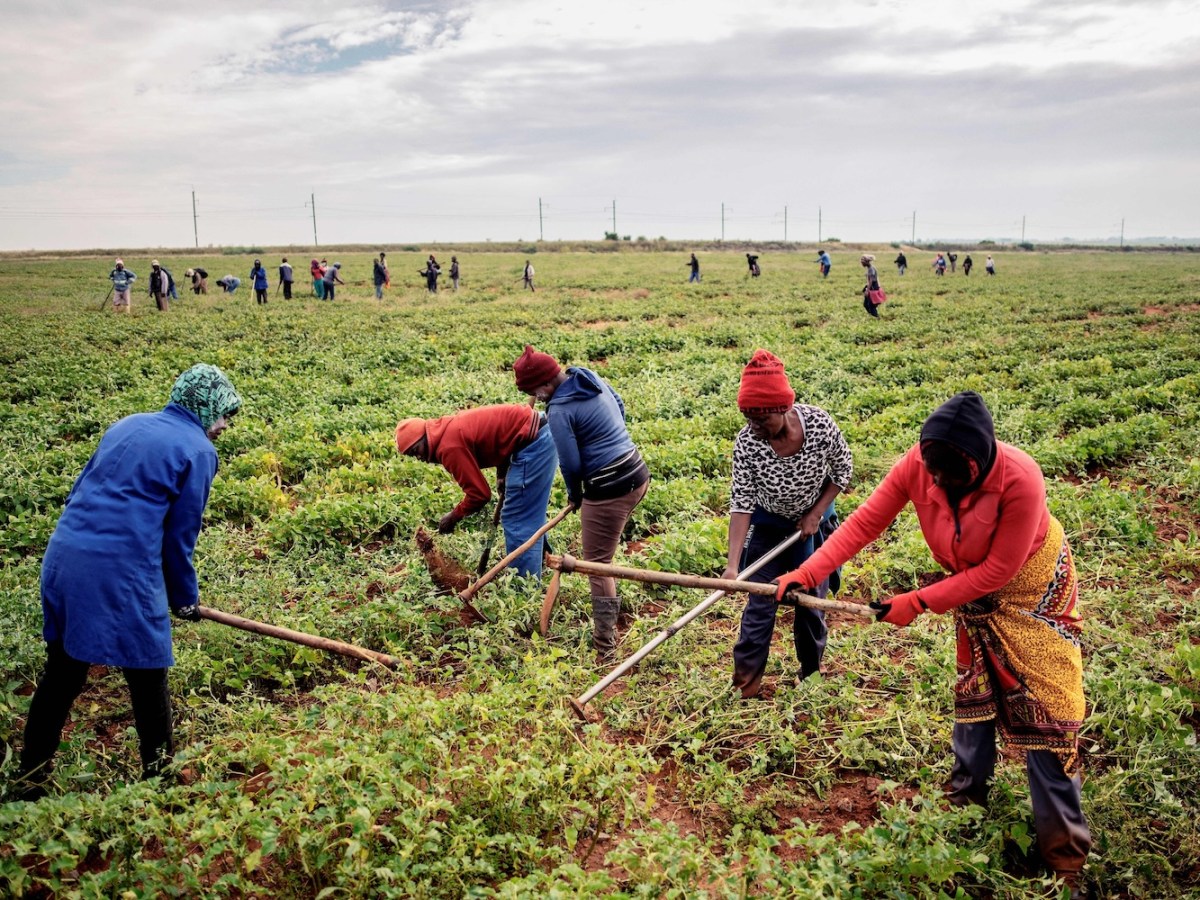
What is rarely acknowledged is that many of the farmers leaving are not the large-scale, highly productive commercial giants that dominate media imagery. They are often smaller landholders, underutilising land, sitting on inherited property, or farming at marginal productivity levels. This was also true in Zimbabwe, though the myth persists that every white farmer was a paragon of efficiency and national importance.
Land ownership does not automatically equal productivity.
The media prefers simple heroes and villains, but reality is messier. In both Zimbabwe and South Africa, there have always been farmers sitting on land without meaningful output. That does not justify violence or theft, but it does complicate the moral story.
If South Africa were tactically clever, it would not panic about Trump’s refugee rhetoric. It would quietly let the door swing open.
Encourage voluntary sales.
Offer fair, transparent compensation.
Provide relocation support if necessary.
Let those who feel unwanted or unsafe leave with dignity.
That is not persecution. That is choice.
Land inequality in Africa is real. It is the direct result of colonial dispossession. The uncomfortable truth is that there is no perfect way to correct a historical injustice without upsetting someone in the present. The challenge is to reduce harm while restoring balance.
Violence is the worst option.
Denial is the laziest option.
Voluntary transition may be the least damaging option.
South Africa’s strength, unlike Zimbabwe’s at the time, is that it still has functioning institutions, access to capital and global legitimacy. It does not need to rush. It does not need to burn bridges. And it certainly does not need to perform land reform for Western approval.
If some farmers genuinely believe their future lies in America, let them go. The United States has land. It has subsidies. It has protections. What it does not have is cheap, exploitable labour and weak regulation, which may explain why only certain farmers are interested in leaving.
The real question is not whether land reform can be fair.
It is whether it can be honest.
And honesty begins by admitting that land ownership, productivity, race and justice are far more complex than the slogans sold by foreign politicians with no stake in Africa’s future.
History has already shown South Africa what not to do.
The challenge now is figuring out what to do without pretending the problem does not exist.
