

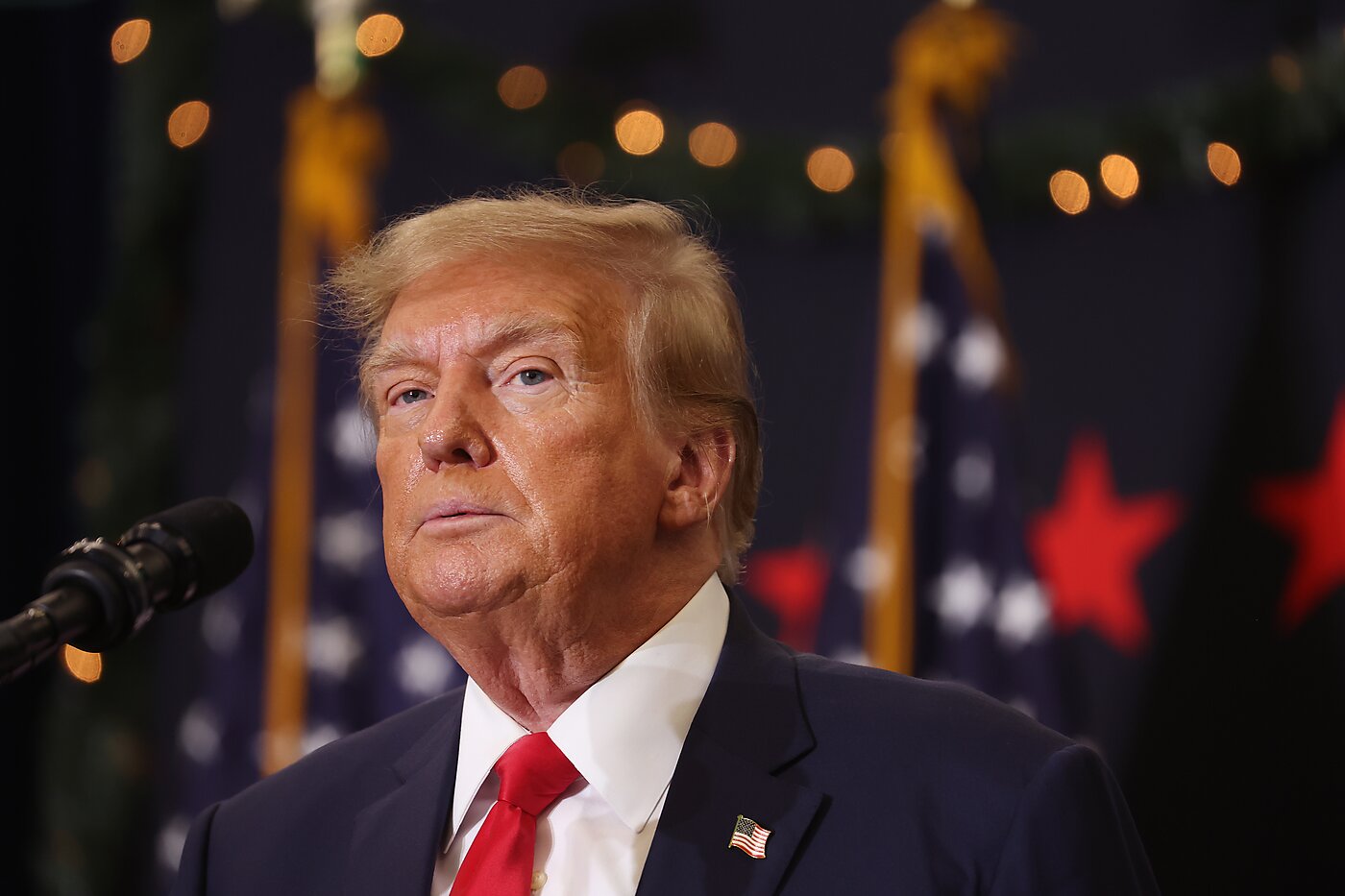
Watching the immigration raids unfolding across the United States of America, and the brutal tactics being used by federal agents, it is impossible not to see uncomfortable historical parallels.
The language being used is familiar.
“We are taking our country back.”
“We are removing undesirables.”
“We are restoring order.”
These are not new political phrases. Zimbabweans have heard them before.
They echo the rhetoric used during Zimbabwe’s land seizures, when violence was justified as reclamation, when brutality was reframed as justice, and when dispossession was sold as patriotism. Different context, different actors, same logic: violence becomes morally acceptable when it is wrapped in the language of sovereignty.
But there is a crucial difference.
In Zimbabwe, much of the violence was carried out by war veterans and political militias. These were not disciplined state institutions. They were semi-autonomous groups that the state lost control over. Robert Mugabe did not command them so much as submit to them, because their loyalty was politically essential to his survival. The Zimbabwean state was weak, fragmented and incapable of restraining the forces it had unleashed.
That does not excuse the violence.
But it explains its structure.
What is happening in America is fundamentally different.
Here, the violence is not informal.
It is not chaotic.
It is not militia-driven.
It is not the product of state weakness.
It is state power itself.
Federal agents.
Formal chains of command.
Institutional authority.
Legal frameworks.
Operational planning.
This is not loss of control.
This is the controlled deployment of power.
And it is being justified openly by Donald Trump and his political ecosystem as “law enforcement”, “national security” and “border protection”.
If these same tactics were unfolding in Zimbabwe, the language in Western capitals would be immediate and unified. Sanctions. Condemnations. Emergency UN statements. Media outrage. Diplomatic pressure. Human rights investigations.
We have seen this script before.
After post-election violence in Zimbabwe, when soldiers shot protesters, sanctions were renewed. Western governments spoke of state brutality, abuse of power and repression. The moral framing was clear.
Yet now, in America, brutality is being normalised.
Human beings are treated as disposable.
Rights are subordinated to enforcement.
State violence is reframed as order.
Fear is rebranded as security.
And it is accepted.
Even more disturbing is the silence. Europe says nothing. Western governments say nothing. Institutions that normally speak loudly about human rights suddenly find their voices.
Not because the violence is less severe.
But because the state committing it is powerful.
This hypocrisy is not subtle. It is structural.
When Iran uses force to suppress unrest, the narrative is instant: dictatorship, repression, illegitimacy. When America uses force, the narrative shifts: stability, law, order, enforcement. Same methods. Same outcomes. Different labels.
The moral framework is not universal.
It is geopolitical.
That should worry everyone.
Because what is being normalised is not immigration control. It is the idea that state violence is acceptable when it is politically convenient, racially coded, and institutionally sanitised.
Zimbabwe’s violence was chaotic and uncontrolled.
America’s violence is bureaucratic and procedural.
That does not make it better.
It makes it more dangerous.
One reflects state weakness.
The other reflects state confidence.
And confidence in the use of force is always the most frightening form of power.
I do not know how this ends. But I do know this: when brutality becomes policy, when dehumanisation becomes governance, and when violence becomes normalised through legality, societies do not become safer.
They become colder.
More authoritarian.
More divided.
More fragile.
And history shows that once a state learns that violence can be justified, it rarely stops at its original targets.
