

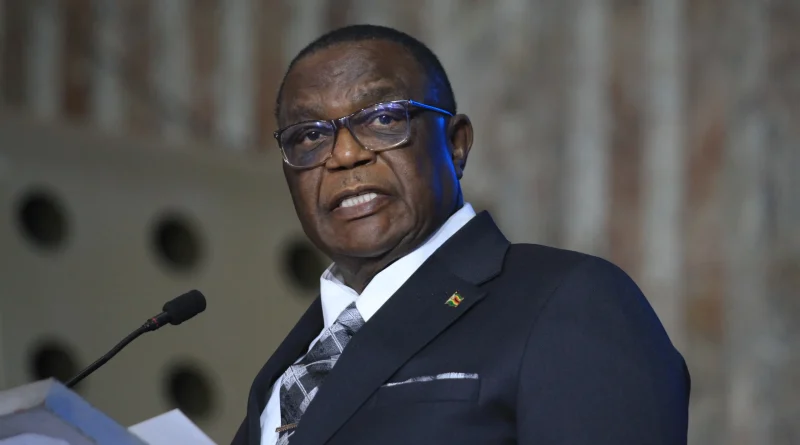
The growing tension inside ZANU PF is no longer just about succession. It is about control. And at the centre of this struggle sits Vice-President Constantino Chiwenga, increasingly positioned against a powerful class of politically connected business elites who have come to dominate the ruling party’s economic machinery.
For years, ZANU PF has operated on an uneasy alliance between the securocrats who seized power and the business figures who monetised it. That arrangement is now breaking down.
Chiwenga represents the old command structure: the military wing that believes political authority should ultimately rest with those who “liberated” and “secured” the state. The business elites represent something newer and more dangerous to that worldview: wealth without discipline, influence without ideology, and power without military pedigree.
Figures such as Kudakwashe Tagwirei, Wicknell Chivayo and Paul Tungwarara symbolise this shift. They are not merely beneficiaries of the system; they are increasingly shaping it. Through tenders, quasi-state programmes and proximity to the Presidency, they have blurred the line between party, state and private capital.
For the military establishment, this is an existential threat.
Chiwenga’s anti-corruption posturing is often dismissed as selective or self-serving, but it reflects a deeper anxiety. The generals fear being sidelined by men who command money rather than guns, patronage rather than troops. In a post-Mnangagwa future, wealth networks could outmanoeuvre military loyalty, especially if succession is decided through internal bargaining rather than force.
This explains why business figures are now being named, criticised and exposed in ways that would have been unthinkable a few years ago. The corruption dossiers, the public accusations, the sudden suspensions of empowerment programmes are not about morality. They are warnings.
The message from the securocrats is simple: you may be rich, but you are not untouchable.
At the same time, the business elites are not innocent bystanders. They have grown emboldened by proximity to power, speaking openly, funding factions and positioning themselves as kingmakers in the succession race. Their mistake has been assuming that money alone can neutralise the military wing.
Zimbabwe’s ruling party is now caught between two irreconcilable forces: guns that demand loyalty and capital that demands access. That conflict cannot be permanently managed. One side will eventually have to give.
What we are witnessing is not chaos. It is a struggle over who owns the state after Mnangagwa. And for the first time, the answer is no longer obvious.
